
















Short answer: yes, a DIY burglar alarm can work just as well as one fitted by an installer, provided you get three things right: sensors in the right places, a siren that can be heard outside, and an alert that still reaches you when the Wi-Fi drops out. The technology is the same; the difference lies in the choices you make when you put it up. What you don't get by installing it yourself is a monitoring centre keeping watch for you and a certificate for your insurer. For most homes that isn't a problem; for some policies it is.
"One of those kits off the internet, is that really secure?" It's the question we hear most often, and there is usually a healthy dose of doubt behind it: an installer knows what they're doing, whereas you stick a few sensors on the window frames in a quarter of an hour. In this article we set out honestly what a self-installed alarm can and cannot do, where it goes wrong in practice, what independent tests say about it, and how to make sure your DIY alarm really is as good.
Our solution
Home alarm system
ShieldLink® is a wireless alarm system with no subscription that you fit yourself: sensors on doors, windows and around the house, an outdoor siren and an alert on your phone.
Explore the options
What is the difference between installing it yourself and using an installer?
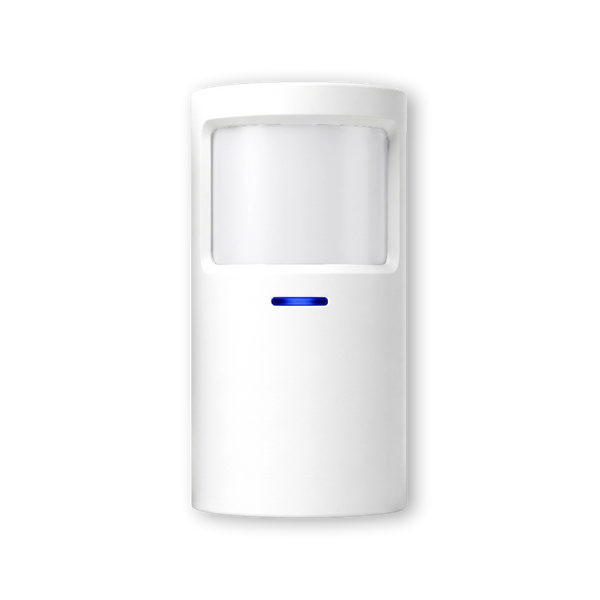
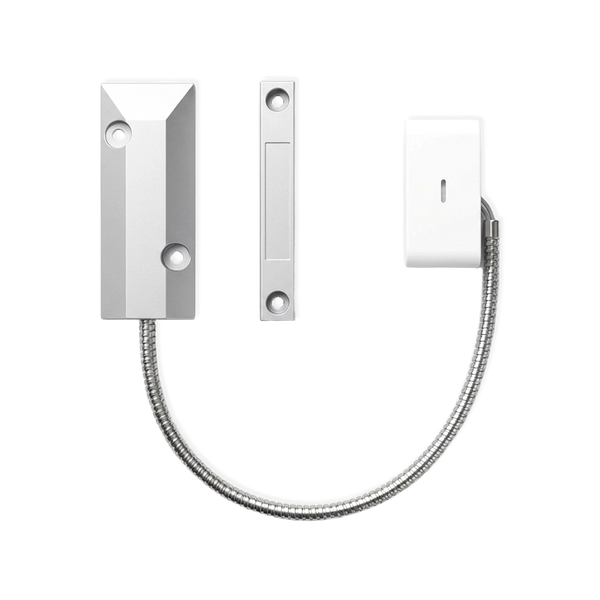
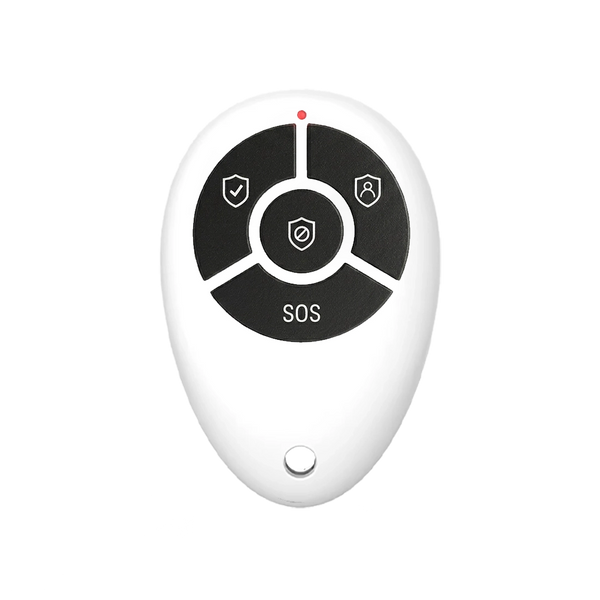
Let's start with what is not different: the technology. A wireless alarm system consists of a panel, magnetic contacts on doors and windows, motion detectors, a siren and an app. Whether you screw that panel to the wall yourself or a fitter does it, they are the same sensors with the same detection. A door contact you stick on the frame sees a door open just as well as a door contact fitted by an installer.
The difference lies in three things. First, the choices: where do you put what, and have you missed anything? An installer walks through your house with a trained eye; you have to work that out for yourself. Second, the follow-up: many installers bundle a subscription with a monitoring centre that assesses an alarm and escalates it if you don't respond. With a DIY alarm the alert comes to you and you decide what happens next. Third, the paperwork: an approved installer can issue a certificate that an insurer sometimes requires. That last point doesn't apply to most ordinary homes, but it's worth checking in advance whether your policy says anything about it.
| Aspect | Install it yourself | Installer |
|---|---|---|
| Technology | The same wireless sensors, siren and app | The same technology, sometimes wired |
| Placement | You decide where everything goes | The fitter chooses the locations |
| Alerts | Straight to your phone; with a SIM card also by text and call | Usually via a monitoring centre with a subscription |
| Certificate | No | Possible, if the insurer requires it |
| Costs | The set, paid once | Installation plus usually a monthly fee |
| Moving house or expanding | Yourself, whenever you like | Through the installer |
What do independent tests say?
The German consumer organisation Stiftung Warentest tested DIY alarm kits and came to a nuanced verdict. The good news: every system tested reliably detected a break-in attempt, set off a loud siren and sent an alert to the phone. With a bit of handiness, self-installation took a few hours. The bad news wasn't in the detection but in the details: some systems didn't warn on arming that a window was still open, on some you could remove a sensor or siren without triggering the alarm, and the control panel wasn't always protected against tampering. The testers' advice: mount the panel out of sight, cover it with a motion detector and think like a burglar when you put everything up.
The Dutch police say something similar. In an interview with Interpolis (a Dutch insurer), a residential burglary expert from the police calls an alarm system "definitely worth doing", because it deters burglars and stickers on windows and doors make that visible. At the same time he points to the biggest problem with alarms in general: around 80 to 90 percent of the burglary alerts the police receive turn out to be false alarms. That isn't down to self-installation, but to badly placed sensors, pets and users who don't know their system properly. And that is exactly where careful installation makes the difference.
The five mistakes that make a DIY alarm bad
A DIY alarm is rarely bad because the system is bad. It's bad because it has been put up in the wrong places or is only half used. These are the mistakes we see most often.
- Only protecting the front door. Most burglars get in at the back: the garden door, a kitchen window, a fanlight. If you only stick a contact on the front door, you're protecting the entrance the burglar was going to avoid anyway. Start with the back door and the ground-floor windows.
- The motion detector in the wrong place. Directly opposite a window the sun shines through, above the radiator or on the cat's regular route: that gives false alarms, and after three false alerts you switch the thing off. Mount it in a corner, at around two metres high, aimed at the route a burglar has to take. We explain exactly how in our article on where to place a motion detector.
- No siren outside. A panel beeping indoors is something the neighbours never hear. A burglar wants silence and time; a blaring outdoor siren takes away both and puts the whole street on alert. Without an outdoor siren, your alarm is mainly a notification for yourself.
- Relying on Wi-Fi alone. If the router goes down, or a burglar pulls the plug in the meter cupboard, an alarm that only reports over Wi-Fi sends nothing at all. A SIM card in the panel gives you a second route by text message and phone call. What exactly happens during a power or internet outage is covered in our article on an alarm system without Wi-Fi.
- Never testing it and never arming it. The best system is worthless if it's switched off. An alarm that causes hassle every time you leave the house stops being used after a month. Set up home mode and the remote control properly, and test the system at least once a year by triggering every sensor.

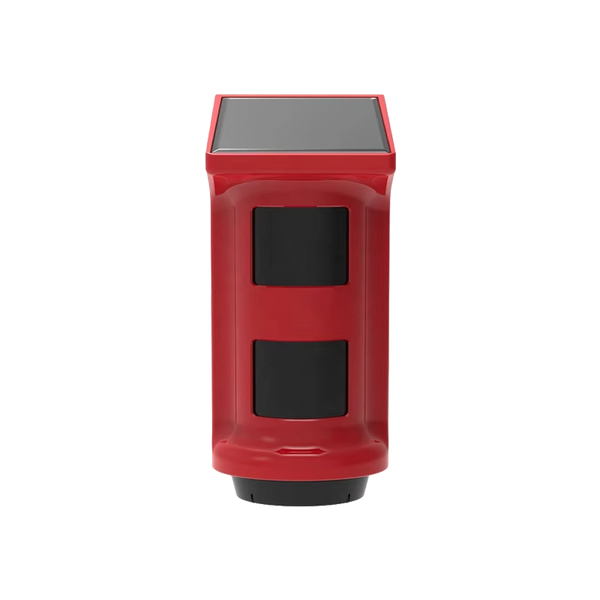
The very points on which DIY kits fell short in tests are built into a good system. The ShieldLink panel has tamper protection: pull it off its wall plate and the alarm goes off. The ShieldHorn outdoor siren has the same protection and runs on solar power, so it hangs outside without a cable and without batteries to replace, with a powerful sound and a strobe light that makes it obvious something is going on. A burglar who tries to disable the system ends up right in the light and the noise.
Where a self-installed alarm is actually better
It's not just a matter of "almost as good". On a few points, an alarm you manage yourself has the upper hand. You know your own home better than a fitter who is there for an hour: you know which door is always open, where the cat walks and which window you leave ajar at night. You can adapt the system as soon as your life changes — an extra contact on the shed when an e-bike arrives, a smoke detector on the landing when a baby is born — without making an appointment and without a call-out charge. You know exactly how it works, because you built it up yourself; that cuts down on false alarms. And you remain the owner: if you move house, you take it with you. One of our customers, after cancelling a subscription alarm, could no longer get into the app and had no use left for the equipment still hanging on the wall; with a system you buy outright, that can't happen.
Financially, the difference is big too. You pay once for the set and nothing runs on after that. What a home alarm system costs and how that compares with a subscription is worked out in our article on the cost of an alarm system.
When you do need an installer
To be fair: there are situations where installing it yourself isn't enough. If your insurer requires a certified system, for example a BORG certificate (a Dutch security certification) for high-value contents or business premises, there's no way around an approved installation company; check that before you buy anything, because the requirements differ from policy to policy. If you want someone else to assess and act on your alarm while you're asleep or unreachable, that is exactly the service you buy from a provider with a monitoring centre. And if you have neither the inclination nor the time to fit it yourself, you can outsource the installation without signing up to a subscription: Neroo offers an installation service in the Netherlands and Belgium where a fitter delivers the system in working order, and a configuration service where the sensors are paired and labelled in advance, so that all you have to do at home is put them up.
How to make your own alarm just as good
If you want to do it yourself and do it well, work through these steps. It takes an evening, and afterwards you'll have a system an installer would find little to fault.
- First walk around your house like a burglar. Where would you get in if you didn't want to be seen? Those spots get the first sensors: the back door, the garden doors, ground-floor windows and anything reachable via a flat roof or a shed. How many sensors that adds up to for each type of home is set out in our worked example per type of home.
- Mount the panel out of sight, with a motion detector in front of it. Not next to the front door in view of the window, but in the hall or the meter cupboard, so that anyone trying to reach the panel has to pass a sensor first.
- Put a siren outside and a sticker on the window. The siren makes the noise; the sticker stops it ever getting that far. A burglar choosing between a house with an alarm sticker and one without rarely picks the first.
- Make sure there is a second way to report. With a SIM card in the ShieldLink® Pro panel you get a text message and a phone call on top of the push notification, even when the Wi-Fi or the power goes down.
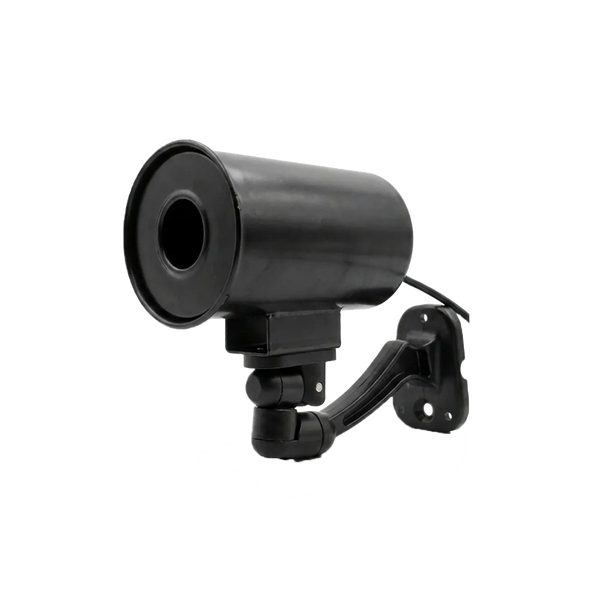
- Send the alerts to more than one phone and agree who does what. If you see on the camera that someone is inside, you call 112.
- Test the system and repeat it every year. Open every door and window with a contact, walk past every motion detector, let the siren sound briefly once and replace any batteries that are nearly flat. Put that test in your diary for when the clocks change.
Not sure you can manage it yourself? A wireless system such as the ShieldLink® Plus - Compleet sticks onto the window frames with the adhesive pads supplied, pairs in the app and is up and running the same evening. How long that takes in practice and what you need is covered in our article on how long it takes to install a wireless alarm.
So are DIY burglar alarms any good?
Yes, if you put them up properly: the technology is the same as an installer's, and with sensors at the back of the house, an outdoor siren, a SIM card as a second way to report and an annual test, a self-installed alarm does what it's meant to do. Only if you need a certificate for your insurer, or want a monitoring centre keeping watch for you, do you need an installer.


Our solution
Home alarm system
ShieldLink® is a wireless alarm system with no subscription that you fit yourself: sensors on doors, windows and around the house, an outdoor siren and an alert on your phone.
Explore the options
Frequently asked questions
Is a self-installed alarm valid for my insurance?
For most private home contents policies an alarm system isn't a condition, so it isn't a point of discussion either. If your insurer does set requirements, for example a BORG certificate (a Dutch security certification) for high-value contents, then only a system from an approved installer counts. Read your policy terms or ask before you choose.
Can a burglar disable a wireless DIY alarm?
A good system makes that difficult: the ShieldLink panel and outdoor siren have tamper protection that sets off the alarm as soon as someone takes them off the wall, and the panel keeps running on its backup battery during a power cut. Mount the panel out of sight with a motion detector in front of it, and a burglar has to pass a sensor before they can even get near it.
How many false alarms does a self-installed system give?
That depends almost entirely on the placement, not on who puts it up. Motion detectors aimed at a window, a radiator or a pet's regular route produce the most false alerts. Mount them in a corner at around two metres high, aimed at the route a burglar has to take, and use home mode when you're at home.
Do the police come out to an alarm without a monitoring centre?
The police don't respond to an unconfirmed automatic alarm signal; that is why a monitoring centre verifies an alarm first before passing it on. Without a monitoring centre you do that verification yourself: if you see or hear that your home is being broken into, for example live on your camera, and you call 112, the police will come out just the same. A camera alongside your alarm makes that verification possible in a matter of seconds.
How long does it take to install an alarm system yourself?
A wireless set for an average family home goes up in an evening. You stick the sensors onto the window frames with the adhesive pads supplied, pair the panel in the app and then register each sensor one by one. Allow one to two hours, including testing.
Sources and references
- Stiftung Warentest (German consumer organisation), Alarmanlagen zum Selbsteinbau (test 11/2017) — accessed November 2026
- Interpolis Magazine, interview with the Nationale Politie (the Dutch police), Een alarmsysteem aanschaffen: doen of niet doen? (16 June 2022) — accessed November 2026
- Kassa (BNNVARA), Hoe kun je zo goed mogelijk je huis beveiligen? (7 January 2022), with figures from CBS (the Dutch statistics office) and the police — accessed November 2026
- Politiekeurmerk Veilig Wonen (CCV) (the Dutch Secured Housing certification), Preventietips tegen woninginbraak — accessed November 2026
- Neroo.nl, Current product data for the ShieldLink sets, ShieldHorn and the installation and configuration service


