
















Short answer: you secure a shed or garage in three layers: a good lock on the door so that breaking in takes time, an alarm that goes off the moment the door or window opens, and a camera that shows you what is going on. With a wireless alarm system you don't need to run a cable out to the shed: a door sensor and a motion detector report to the panel in the house, and you get the alert on your phone. Up to 40 percent of stolen bikes disappear from a garage, shed or office — exactly the place most people pay the least attention to.
An e-bike worth two or three thousand euros spends the night in a wooden shed with a ten-euro lock on it. That is the reality in a lot of gardens, and thieves know it. In 2025, almost 87,000 bicycle thefts were reported to the police in the Netherlands, and a good share of them happened not at the railway station but at home, in the storage room or the garage. In this article we set out how to properly secure a shed or garage: what the figures say, what thieves actually do, which three layers work, and how to get a wireless alarm up and running in a detached shed.
Our solution
Alarm system for garage and shed
Wireless sensors on the shed door and window, linked to the panel in the house. No cables, no subscription, just an alert on your phone.
Explore the options
How often are things stolen from a shed or garage?
Bicycle theft has been rising for years. According to figures from CBS (the Dutch statistics office) compiled by the ANWB (the Dutch motoring and cycling association), people in the Netherlands reported a stolen bike to the police almost 60,000 times in 2021; in 2025 the figure was 86,950, a rise of 45 percent. And those are only the reports: according to the CBS Veiligheidsmonitor (the national safety survey), only around four in ten victims go to the police, so the real number is several times higher. Expensive e-bikes and fat bikes are the biggest driver of the losses, which the insurers' organisation VbV puts at more than 700 million euros a year.
Where those bikes disappear from is the striking part. According to the VbV, which runs the national campaign against bicycle theft, up to 40 percent of stolen bikes are taken from a garage, shed or office. The owner thinks the bike is safely indoors; the thief sees a wooden door with a basic lock. And the chance of ever seeing your bike again is slim: in 2025, just 2 percent of reports nationwide were solved.
| Bicycle theft in the Netherlands | Figure |
|---|---|
| Police reports in 2025 (provisional, CBS) | 86,950, around 238 a day |
| Increase compared with 2021 | +45% |
| Victims who report the theft | around 4 in 10 |
| Stolen from a garage, shed or office | up to 40% |
| Reports solved in 2025 | 2% |
Sources: CBS via ANWB and Fietsverzekeringen.nl; VbV (Staat-e-lekker campaign, April 2025).
Why the shed is such an attractive target
A shed combines everything a thief is looking for. It sits at the back of the garden, out of sight of the street and often out of sight of your own bedroom window too. The door is made of wood or thin steel, the lock is rarely more than a padlock or a basic cylinder, and there is no light. Inside are things that are quick and easy to sell on anonymously: e-bikes, power tools, a scooter, a lawnmower.
On top of that, during the dark months a shed goes unwatched for hours at a stretch. Nobody wanders down to the bottom of the garden on a November evening. A thief who climbs over the fence has peace and time, and an alarm in the house won't notice a thing. The garage next to or under the house is vulnerable too: an up-and-over door opens in seconds with the right grip, and anyone who gets into the garage is often standing in front of a connecting door into the house.
Layer 1: slow them down with locks and hardware
The first layer is mechanical, and it's not one you skip. An alarm tells you someone is inside; a good lock makes sure they take longer and make more noise getting there. That is exactly what a thief doesn't want.
- Lock the bike up indoors as well. An e-bike in a shed that is only on its frame lock is gone in ten seconds. Chain it to a wall anchor or a heavy object, so it can't simply be carried off.
- Choose a lock with SKG stars. A padlock from the DIY store is no match for a pair of bolt cutters. A lock with two or three SKG stars (the Dutch security rating for locks and hardware) has been tested for burglary resistance and costs a thief minutes instead of seconds.
- Check the hinges and the frame. An expensive lock on a door with the hinges on the outside is no help: the thief simply knocks the pins out. Secure the hinge pins or replace them with a burglar-resistant version, and screw the frame down firmly.
- Limit the view inside. A window in the shed door is a shop window. Film, a small curtain, or simply keeping anything valuable out of sight removes the temptation.
- Take the tools away. A ladder leaning against the shed, a wheelie bin next to the fence or tools left lying outside make the thief's job easier. Put them away or secure them.
Layer 2: detect with an alarm in the shed
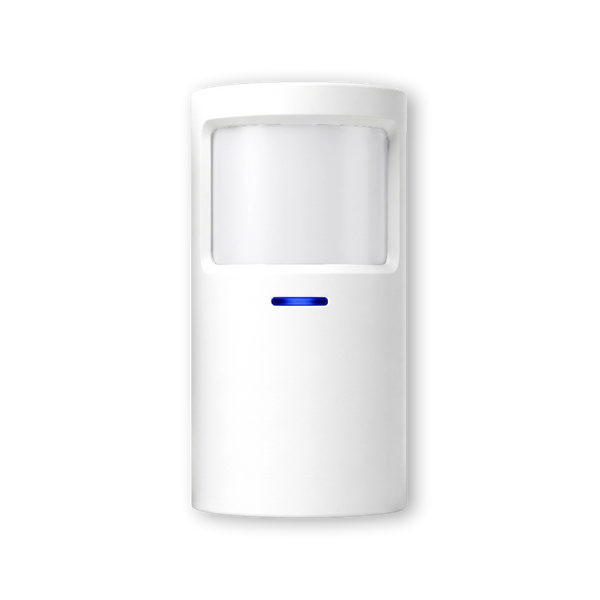
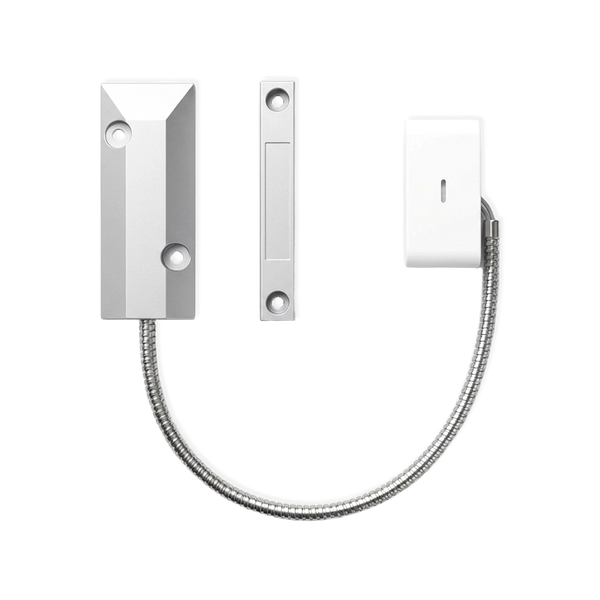
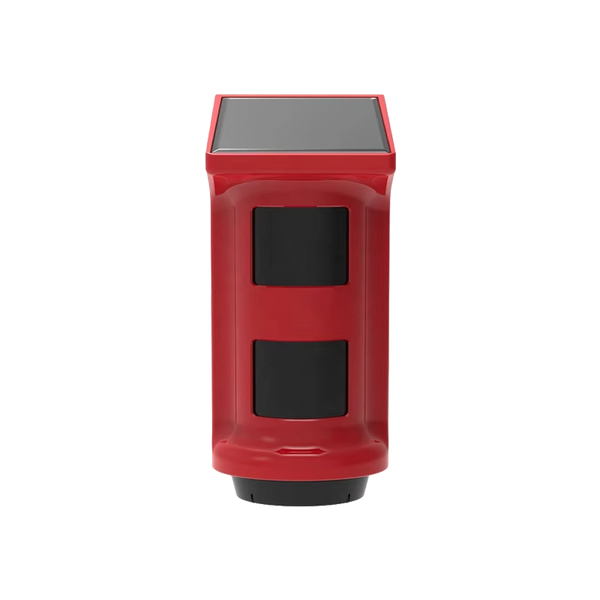
The second layer makes sure you notice. An alarm in the shed doesn't have to be a separate system: you simply add extra sensors to the alarm panel already on the wall in the house. A wireless door sensor such as the LockSense Pro sticks onto the shed door and the frame; if the door opens while the alarm is armed, the siren sounds and you get an alert. A motion detector such as the ShieldSense Pro goes in the corner of the shed, so that anyone coming in through the window or the roof is picked up as well. On the shed window itself you can fit a ShockSense, which detects the shocks and vibrations of a break-in attempt before the window is even open.
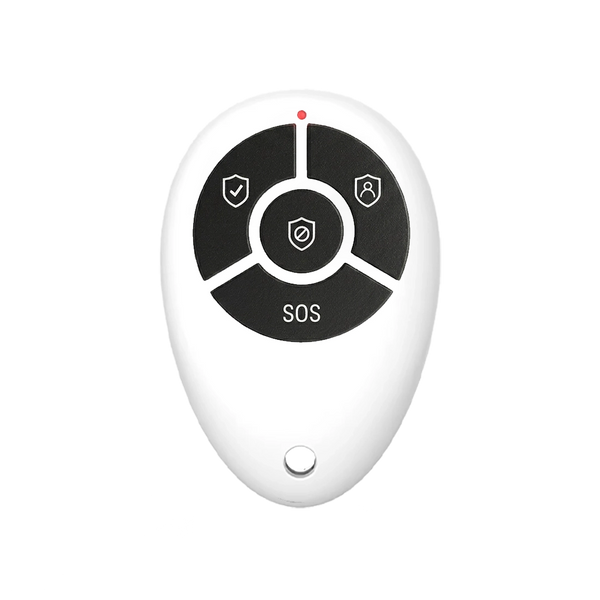
The big advantage: you use the same app, the same panel and the same siren as for the house. The shed becomes an extra zone. Many people leave the shed sensors armed in home mode too, since they never go into the shed at night anyway. If you use the garage as an entrance every day, you put a SlimPad there: a small wireless keypad that lets you arm and disarm the system at the garage door with a PIN code or RFID tag, without walking to the panel in the house first. Bear one thing in mind: the SlimPad only transmits; it doesn't show the system status and doesn't beep when you enter. The main panel in the house does that.
Layer 3: see with light and a camera

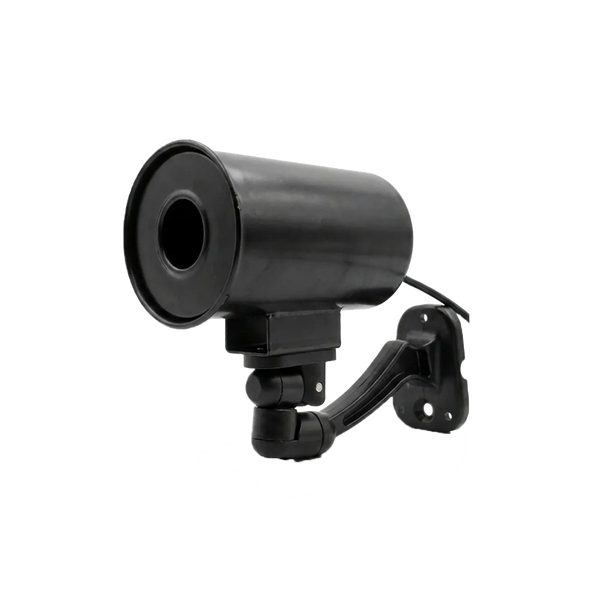
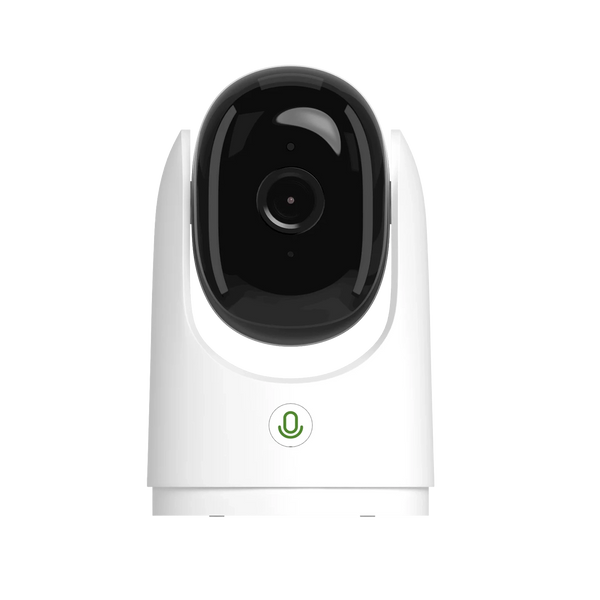
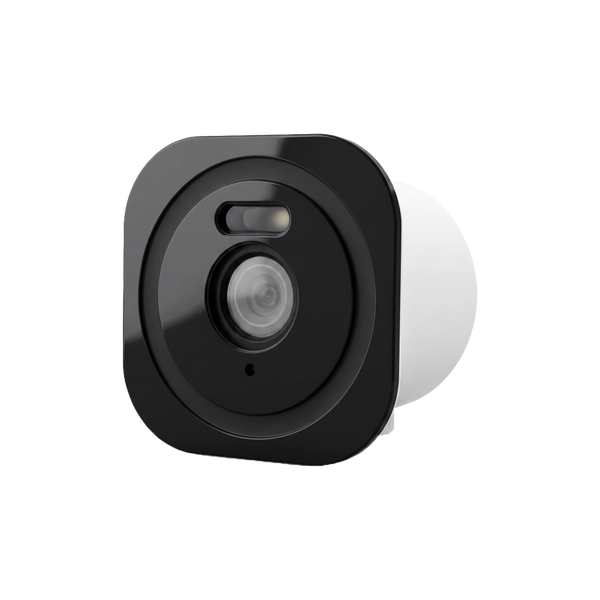
The third layer takes away the dark and gives you a picture. A light with a motion sensor by the shed door is already a deterrent: nobody wants to stand in the spotlight while forcing a lock. The Wally combines that kind of light with a 2K camera and a solar panel, so it mounts on the shed without a cable and starts recording as soon as someone walks past, even without Wi-Fi. If you want to watch live from the house and get an alert the moment someone is on the driveway or by the shed, the Havic SolarCam is the camera for that: wireless, solar-powered, with motion detection that recognises people, night vision and two-way audio, so you can tell them through the camera that you're watching. When the alarm alert from the shed door comes in, within a few seconds you can see whether it's the neighbour's cat or a thief, and you call 112 if you see a break-in in progress.
How a wireless alarm works in a detached shed
The question we get asked most often: will a sensor in the shed actually reach the panel in the house? Usually with plenty to spare. ShieldLink's standard sensors reach around 150 metres to the panel in open air; a shed at the bottom of a twenty-metre garden is well within that. Thick walls, a steel garage door or a panel tucked away in the meter cupboard shorten the range, so give it a quick test: stick the sensor on the shed door, open it and check that the alert comes through. If it doesn't, mounting the panel on the garden side of the house often does the trick. For really long distances, such as a barn on a farmyard or a warehouse, there are the Elite sensors and the ShieldLink® Elite panel, which bridge up to 500 metres.
Power is not a problem: the sensors run on batteries and don't need a socket. Wi-Fi in the shed isn't needed either, because the sensors talk directly to the panel, not to your router. Only a camera needs Wi-Fi to stream live footage; if your network doesn't reach the shed, the Wally is the answer, because it lights up and records locally even without Wi-Fi. If you don't have an alarm at all yet, a set such as the ShieldLink® Plus - Compleet is the place to start: panel, sensors and outdoor siren for the house, after which you add the shed with an extra door sensor and motion detector. We work out how many sensors you need in the house in our article on the number of sensors per home.
So how do you secure a shed or garage?
In three layers: an SKG-rated lock and a chained-up bike so that breaking in takes time, a wireless door sensor and motion detector linked to the alarm panel in the house so you know straight away, and lighting with a camera so you can see what is happening. The sensors run on batteries and reach the panel over around 150 metres, so there's no need for cables or Wi-Fi in the shed.


Our solution
Alarm system for garage and shed
Wireless sensors on the shed door and window, linked to the panel in the house. No cables, no subscription, just an alert on your phone.
Explore the options
Frequently asked questions
Can I use an alarm system in a shed with no electricity?
Yes. The door sensors and motion detectors run on batteries and send their signal wirelessly to the alarm panel in the house. Only the panel itself needs a socket, and that is indoors. A solar-powered camera, such as the Havic SolarCam or the Wally, doesn't need a power point either.
How far can the shed be from the alarm panel?
ShieldLink's standard sensors reach around 150 metres in open air; walls and a steel door reduce that. For an ordinary back garden that is more than enough. For a shed or outbuilding further away there are Elite sensors with a range of up to 500 metres.
Is an e-bike in a locked shed insured?
That depends on your policy. Many home contents policies only cover theft from a locked shed where there are signs of forced entry, and for an e-bike there is often a maximum payout or a requirement that it was secured with an approved lock. Check the terms or ask your insurer; with an expensive e-bike, a separate bicycle insurance policy is sometimes the better choice.
Does a motion detector work in a cold shed?
A motion detector responds to the difference between a person's body heat and the surroundings, so in a cold shed it actually works very well. Do keep an eye on the batteries, though: cold shortens their life, so check them at the start of winter and replace them in good time.
How do I secure a garage with an up-and-over door?
Fit a door sensor on the up-and-over door and a motion detector in the garage, and don't forget the connecting door into the house: that should get a sensor too. Mechanically, an extra bolt or garage door lock on the inside helps, so the door can't be prised open from outside with a grip on the handle.
Sources and references
- ANWB, Fietsdiefstal stijgt voor het vierde jaar op rij: vooral e-bikes populair bij dieven (CBS figures 2021-2025) — accessed October 2026
- Fietsverzekeringen.nl, Fietsdiefstallen in 2025 (CBS and police figures) — accessed October 2026
- Stichting Verzekeringsbureau Voertuigcriminaliteit (VbV) via Risk & Business, Tien gestolen fietsen per uur: campagne Staat-e-lekker (23 April 2025) — accessed October 2026
- Politiekeurmerk Veilig Wonen (the Dutch Secured Housing certification), Preventietips tegen woninginbraak — accessed October 2026
- Neroo.nl, Current product data for ShieldLink, LockSense, ShieldSense, ShockSense, SlimPad, Wally and Havic SolarCam


