















Short answer: Count the openings and the walking routes. You need a magnetic contact on every external door and on every window that can be reached from outside, a motion detector on the routes an intruder has to pass through and a siren you can hear throughout the house. For a flat that often comes to just a few, for a detached house it quickly adds up to ten or more.
Our solution
Home alarm system
Choose a kit as your starting point and add separate magnetic contacts and motion detectors until your whole home is covered. No monthly contract.
View the options
Too few sensors and there is a gap in your security. Too many and you are paying for detectors that add nothing, or that cause unnecessary alerts. The right number does not depend on how many rooms you have, but on how many places someone could get in and the routes they would then have to take. Three simple steps let you work it out for your own home.
The rule of thumb in three steps

Start counting at the back. That is usually where you find the back door, the garden doors or sliding patio door and the windows that can be reached from the garden. Look up as well: a window above a shed or extension counts as reachable.
Step 1. Magnetic contacts: count the openings. A magnetic contact belongs on every external door: the front door, back door, garden doors or sliding patio door, and any door to a garage or storeroom that connects to the house. Then on every window that can be reached from outside. That means the ground-floor windows, but also upstairs windows above an extension, shed, flat roof or balcony. There is good reason the Dutch police warn against leaving ladders, wheelie bins or other climbing aids near your home: anything you can climb on makes a window reachable.
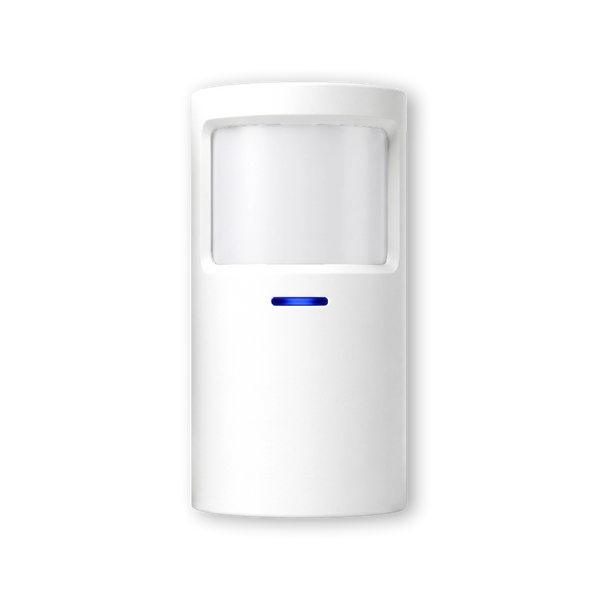
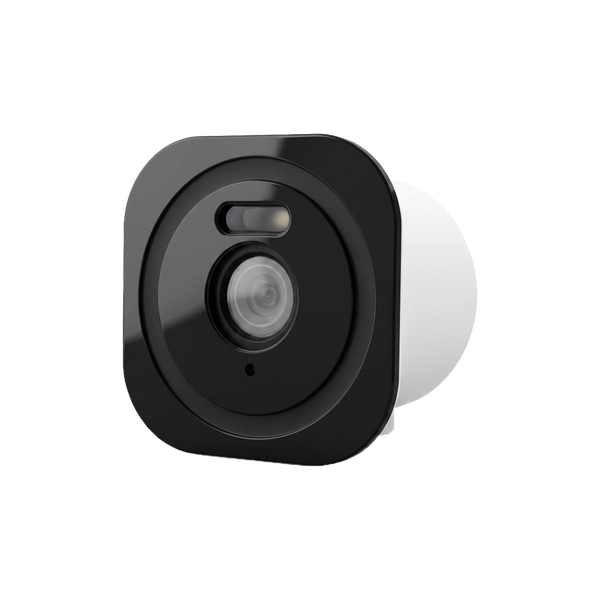
Step 2. Motion detectors: count the walking routes. You do not need a motion detector in every room. It belongs in the places an intruder has to pass through once inside: the hall or corridor, the living room and often the landing. A single ShieldSense covers 110 degrees wide and up to 8 metres deep, so one is usually enough for an ordinary living room. Exactly where to mount it is explained in Where should you mount a motion detector?
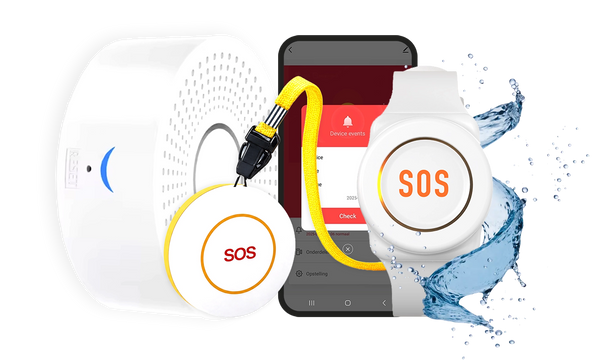
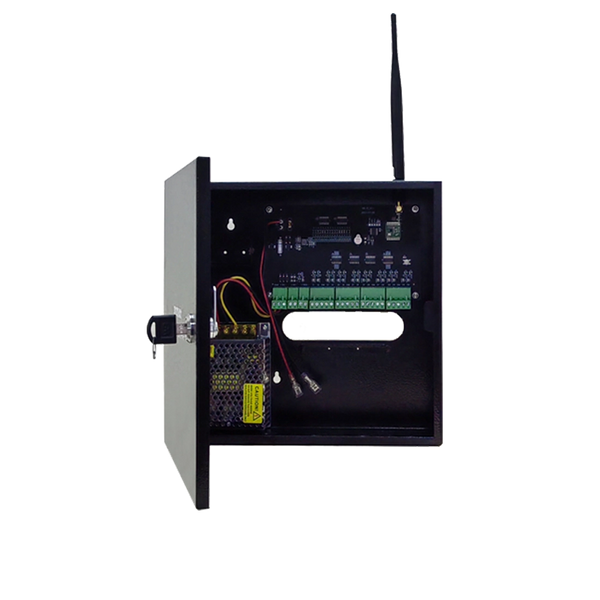
Step 3. Sirens: count the floors. The panels of the ShieldLink® Plus, Pro and Elite have a built-in siren. If you sleep on a different floor from the one where the panel hangs, an extra indoor siren such as the PlugAlert is no unnecessary luxury there. An outdoor siren makes sure the neighbours hear the alarm too.
Why magnetic contacts and motion detectors?
The two types of sensor complement each other. Magnetic contacts guard the shell of the house: they go off the moment a door or window opens, so before anyone is inside. And because they only respond to an opening, you can leave them armed while you are at home or asleep. With the ShieldLink® Pro you link sensors to the Home and Away programmes for this.
Motion detectors are the safety net. If someone gets in through an opening without a contact, for example by forcing a pane, they will still be picked up in the hall or living room. The downside: they only respond once someone is already inside, and at night you usually switch them off because you are walking around the house yourself. For large areas of glass you could also consider a vibration detector such as the ShockSense, which already responds to an attempt to force the glass.
Worked examples by home type
Below is an indication for four common types of home. These are worked examples: always count the doors and reachable windows in your own home, because an extra side door or an extension changes the number straight away.
| Type of home | Magnetic contacts | Motion detectors | Assumptions |
|---|---|---|---|
| Flat on an upper floor | 1 to 2 | 1 | Front door, plus a reachable balcony door if there is one; detector in the hall or living room. On the ground floor the windows count as well. |
| Terraced house | 4 to 6 | 2 | Front door, back door or garden doors and the reachable windows at the front and back; detectors in the hall and living room. |
| End-of-terrace or semi-detached house | 6 to 8 | 2 to 3 | As for a terraced house, plus the windows and any door in the side wall; a third detector on the landing. |
| Detached house | 8 to 12 | 3 to 4 | Every side of the house is reachable; often there is also a utility room, garage or shed. Consider an outdoor siren too. |
If your home has a garage or shed separate from the house, count it separately. That is often where the tools are kept that an intruder could also use on the house. Neroo's standard sensors reach about 150 metres to the panel; for greater distances there are the Elite sensors with a range of up to 500 metres.
What is in the Neroo kits?
The ShieldLink® kits come in three sizes. The number of sensors is the same for the Lite, Plus, Pro and Elite; the Elite kits contain the Elite versions with LoRa.
| Kit | Magnetic contacts | Motion detectors | Matches the worked example for |
|---|---|---|---|
| Start | 2 | 1 | Flat |
| Comfort | 4 | 2 | Smaller terraced house |
| Complete | 6 | 3 | Larger terraced house, end-of-terrace or semi-detached house |
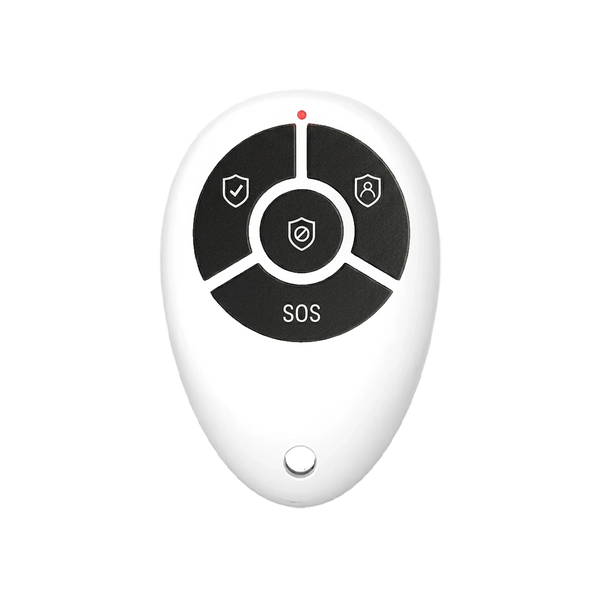
In the Lite, Plus and Pro kits the magnetic contacts are LockSense Pro, and for the motion detector you choose the ShieldSense Pro or the compact ShieldSense Mini. All kits also include remote controls; the number differs per kit and is shown on the product page. For a detached house, start with a Complete kit and add separate sensors.
Separate sensors to expand your system
If your home does not fit a kit exactly, you add separate sensors. You can also do that later, for example when you build an extension or want to include the shed. The panels of the ShieldLink® Plus, Pro and Elite support up to 200 accessories, so you will not run out of room.
- Magnetic contacts: the LockSense, the LockSense Pro with a battery that lasts up to 4 years, or the LockSense Elite with a range of up to 500 metres.
- Motion detectors: the ShieldSense, the ShieldSense Pro, the compact ShieldSense Mini or the ShieldSense Elite for long distances.
- Vibration detector: the ShockSense for windows and doors with a lot of glass.
The role each component plays in the system is explained in What are the components of an alarm system? More about positioning magnetic contacts can be found in How does a magnetic contact on a door or window work?
Where people get it wrong
- Forgetting upstairs windows. A bedroom window above an extension or shed is just as reachable as a window downstairs.
- Relying on motion detectors alone. They only go off once someone is already inside, and they will not help you at night if you switch them off.
- A motion detector in every room. Rooms nobody needs to pass through add little; that budget is better spent on an extra contact on a vulnerable door.
- Underestimating the back of the house. According to the Politiekeurmerk Veilig Wonen (the Dutch Police Label for Secure Housing), forced entry happens mainly at back doors and poorly lit spots, and the Dutch police describe the sliding patio door as vulnerable to burglary. So always include those openings in your count.
Sensors are the finishing touch. The Dutch police state that homes with the Politiekeurmerk Veilig Wonen, which starts with good locks and hinges, are up to 90% less likely to be successfully burgled.
So how many sensors does your home need?
One magnetic contact per external door and per reachable window, a motion detector on every walking route and a siren you can hear throughout the house, which in practice comes to a few sensors for a flat and ten or more for a detached house.


Our solution
Home alarm system
Choose a kit as your starting point and add separate magnetic contacts and motion detectors until your whole home is covered. No monthly contract.
View the options
Frequently asked questions
How many magnetic contacts do you need?
One on every external door, such as the front door, back door and garden doors, and one on every window that can be reached from outside. That includes upstairs windows above an extension, shed or flat roof.
Do you need a motion detector in every room?
No. A motion detector belongs on the walking routes an intruder has to pass through, usually the hall, the living room and the landing. You can skip rooms nobody needs to pass through.
How many sensors are in a Neroo alarm kit?
The Start kit has 2 magnetic contacts and 1 motion detector, the Comfort kit 4 and 2, and the Complete kit 6 and 3. Remote controls are included as well; the number is shown on the product page.
Can you buy more sensors later?
Yes. The magnetic contacts and motion detectors are also sold separately, so you can add to a kit later. The panels of the ShieldLink Plus, Pro and Elite support up to 200 accessories.
Do upstairs windows need a magnetic contact too?
Only if they are reachable, for example via an extension, shed, flat roof or balcony. A window you can only reach with a long ladder is less of a priority, especially if there is a motion detector on the landing inside.
Sources and references
- Politie (Dutch police), Tips to prevent burglary — accessed September 2026
- Politiekeurmerk Veilig Wonen (Dutch Police Label for Secure Housing), The most common burglary methods — accessed September 2026
- Politie (Dutch police), Politiekeurmerk Veilig Wonen — accessed September 2026


