















Short answer: Yes. In the Netherlands, an electrician may fit a burglar alarm, and in your own home you can also do it yourself — there is no law against it. If your insurer requires a BORG certificate (the Dutch certification scheme for burglary protection), it's a different story: only a BORG-certified security company may issue that certificate, and an electrician won't be enough.
Our solution
Alarm system for your home
Wireless and plug & play to install, with no cables running through the house — and with an installation service (in the Netherlands and Belgium) or configuration service if you'd rather have it done for you.
Explore the options
Key points
- There is no legal certification requirement. The CCV (the Dutch Centre for Crime Prevention and Safety) is clear about this: in the Netherlands, BORG is not required by law. Insurers, however, often do require it.
- Only a BORG-certified company can deliver an installation under BORG. An electrician without that recognition can do the work, but cannot issue a certificate.
- The Wpbr sets requirements for alarm installers. According to the Dutch police, this act (the Dutch Private Security Organisations and Detective Agencies Act) also sets requirements for people who install alarm systems — relevant if you hire a company.
- Labour is the biggest cost with a wired system. An installer charges an indicative €45 to €80 per hour; the installation alone costs an indicative €200 to €800.
- With wireless, that cost largely disappears. No cables to run means no hours charged to you.
- Always ask about the whole package: what will be delivered, who sets it up, and whether a maintenance contract is attached.
The question often comes from people who already have an electrician in the house: he's doing the wiring anyway, so surely he can put up that alarm as well? He can, and usually that works perfectly well. But there is one dividing line in the answer that you need to know about beforehand, and it has nothing to do with technology and everything to do with your insurance policy.
Is an electrician allowed to do it?
Technically, a burglar alarm is no special job for someone who does electrical work. Mounting a panel, connecting a power supply, fitting sensors in the right places and testing the whole system: that is work within the trade. With a wired system, running the cables is precisely the part an electrician is better at than the average occupant.
Legally, there is no general ban either. The CCV, which manages the quality marks for burglary protection in the Netherlands, states that BORG is not a legal requirement. Anyone without a BORG certificate may carry out the work; what they may not do is use the BORG logo or pretend the installation was delivered under that certificate.
One thing to know if you hire a company: the Wet particuliere beveiligingsorganisaties en recherchebureaus (Wpbr) does apply to this sector. The Dutch police list alarm installers in their overview of organisations to which the act applies, and state that it also sets requirements for people who install alarm systems. So if a company offers alarm systems as a service, simply ask how they have arranged this. For an occupant fitting a wireless system in their own home, this doesn't come into play: that isn't a security service you provide to others.
When you do need a certified company
What BORG actually is
BORG is a certification scheme of the CCV for burglary protection, with two branches: BORG-B for structural measures and BORG-E for the electronic installation. A BORG-certified company thereby shows that it meets the standard — in its organisation, in the expertise of its staff and in the way the design and handover are documented.
The CCV also explains why these certificates exist: insurers often require BORG before you can take out a policy. The certificate is then the proof that your security meets the agreed standard.
Read your policy first
This is the step that determines the whole decision, and it takes five minutes. If your policy conditions include a requirement for a certified alarm system, a BORG-certified company is the only route and an electrician without that recognition is not an option — however well he installs it. If there's nothing about it, you're free: you can have it done by whoever you like, or do it yourself.
For homes, such a requirement is fairly rare; it mainly comes up with high contents values, certain collections, or after a previous burglary. For business premises it is far more common, and the risk classification used by insurers also plays a part there. That's what our article what does an alarm system cost for a business? is about.
Incidentally, the Politiekeurmerk Veilig Wonen (the Dutch Police Label for Secure Housing), which residents come across most often, isn't about alarm systems but about burglar-resistant locks and fittings and good lighting. For that label, the work does have to be done by a recognised PKVW company. An alarm is not a requirement for it.

Wired or wireless: that changes the question
Whether you need a professional depends heavily on the type of system.
Wired. Here, cables run from every detection point to the panel. In a home under construction that's straightforward; in an existing home it means cable trunking, skirting boards or conduits through walls and ceilings. This is the scenario in which an electrician really adds value, and in which labour is the biggest cost.
Wireless. Here, the sensors communicate with the panel by radio signal. Installing then means mounting the panel, sticking or screwing the sensors in place, and pairing everything. That's usually an afternoon's work with no cables through the house — and with that, the reason to hire someone for it disappears too.
What does professional installation cost?
These are the price ranges you'll find on the market for a home:
| Item | What it is | Indication |
|---|---|---|
| Simple system, including installation | A few doors and a motion detector | €500 – €1,000 |
| More extensive system, including installation | More detection points, often with cameras | €1,000 – €2,500 |
| Installation as a separate item | Just fitting and connecting | €200 – €800 |
| Installer's hourly rate | Labour per hour | €45 – €80 per hour |
| Maintenance contract | Annual inspection, sometimes mandatory with a certificate | €100 – €300 per year |
| Connection to a monitoring centre | One-off at the start, excluding the monthly fee | €100 – €300 |
Indicative market prices in the Netherlands, researched in September 2026. The final price depends on the number of detection points, the type of home and whether cables need to be run.
What stands out in these figures is how large the share of labour is. With a wired system in an existing home, the installation can account for a third to half of the bill. That is no criticism of the installer — running cables simply takes hours of work. But it does explain why wireless works out cheaper for many homes, while the detection does exactly the same job.
How hard is it to do yourself?
With a wireless system, it comes down to four steps. A realistic estimate for an average home is half a day, most of which goes into thinking about where the sensors should go.
- Position the panel. Ideally near an interior door or in the hallway, within reach of a socket, and not behind a thick wall relative to the furthest sensor.
- Decide on your detection points. Walk around your home and look at where someone would get in: the front door, the back door, the patio doors, the accessible windows. Start there, not with the roof window.
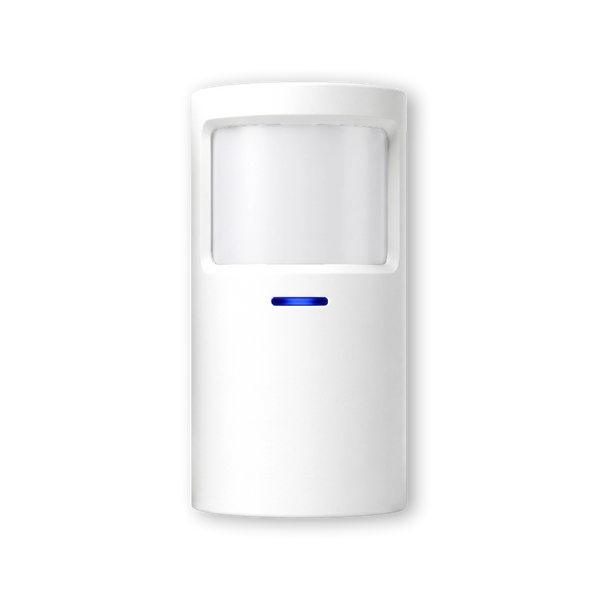
- Fit the sensors. Magnetic contacts on doors and windows, motion detectors in the room someone has to walk through. With motion detectors, check the detection angle and range of the model you have.
- Set up and test. Codes, zones, phone numbers and contacts. Then go past every point and check that the panel reports the correct zone.
That last step is the one most often skipped, and it's the most important. A system that has never been tested is a system you don't know works.

If you'd rather have it done or prepared
Not everyone wants to climb a stepladder themselves. Neroo offers two ways to solve that, and they solve different things.
With the configuration service, your alarm system is delivered as installation-ready as possible: all suitable sensors and accessories are paired with the panel in advance and given clear labels. When ordering, you give the name you want for each sensor — Front door, Back door, Garage, Living room, Bedroom — and those labels are on them when they arrive. Sirens from the same order that can be paired directly are included in the configuration too. Anything that needs internet, Wi-Fi or a personal app login can't be set up in advance; that remains a step for you.
With the installation service (in the Netherlands and Belgium), an installer comes to you and hands everything over in working order. The price depends on the distance, in three tiers: up to 75 kilometres, 75 to 125 kilometres and more than 125 kilometres.

Installation service — have it fitted by an installer
Our installer comes to you and hands everything over in working order (in the Netherlands and Belgium). The price depends on the distance: up to 75 km from € 199,99. If you'd rather mount it yourself but not pair it yourself, the configuration service is the cheaper middle ground.
View the installation serviceFive mistakes to avoid
- Starting with buying instead of with your policy. First check whether a certification requirement applies, and only then decide who installs it.
- Comparing only the purchase price. With any quote, always ask about the installation costs, any maintenance contract and a monthly fee.
- Placing the panel too far from the sensors. With wireless, the distance to the furthest sensor determines whether the whole system is reliable; check the range of the model you buy.
- Forgetting the back door or the shed. These are more often the point of entry than the front door.
- Not testing. After installation, go past every point, and do it again after changing a battery.
Install it yourself or have it prepared

ShieldLink® Lite — Start
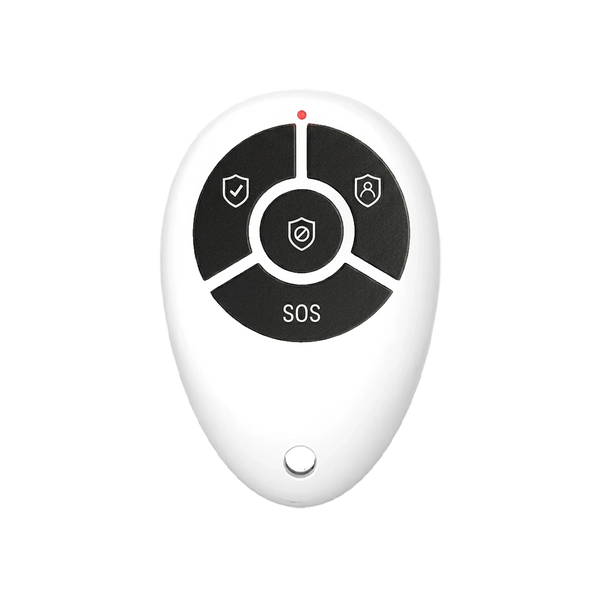
The entry-level kit: panel with backlit keys, control via the app, the remote control and QuickTags key fobs. Keeps working during a power cut.
View the kit
ShieldLink® Pro — Complete
Colour touchscreen, plug & play installation, and with the optional SIM card, alerts by text message and call during a Wi-Fi outage or power cut.
View the kit
Configuration service
We pair the sensors with the panel in advance and label them with the names you give us. Mounting them is then all that's left to do.
View the serviceOur solution
Install it yourself, or have it installed
Wireless, plug & play and with no subscription. If you'd rather have it done, you can use the installation service (in the Netherlands and Belgium) — with no contract that keeps running afterwards.
Explore the options
Can an electrician install a burglar alarm?
Yes — in the Netherlands there is no legal certification requirement, so an electrician may fit a burglar alarm and in your own home you can also do it yourself; only a BORG-certified security company may issue a BORG certificate with it, and you need one as soon as your insurer asks for it.
Frequently asked questions
What does it cost to have an alarm system installed?
Installation as a separate item costs an indicative €200 to €800, at an hourly rate of roughly €45 to €80. Including equipment, you'll pay €500 to €1,000 for a simple system and €1,000 to €2,500 for a more extensive system (Dutch market indication, September 2026). With a wireless system you install yourself, the labour cost disappears.
Are DIY burglar alarms just as good?
In terms of detection, they're no worse than an installed system: a magnetic contact or motion detector works the same whether you put it up yourself or not. Two things are different. You don't get a BORG certificate, so if your insurer requires one, it won't be enough. And the quality of the placement and testing is down to you, while that is exactly what determines whether the system works in practice.
What is the cheapest self-install security system?
The cheapest option is the smallest kit that covers your actual entry points: a panel with contacts on the front and back doors and one motion detector in the room someone has to pass through. You can expand later sensor by sensor, so you don't have to do the whole house straight away. At Neroo, the ShieldLink® Lite — Start is the entry-level kit; the current price is on the product page.
What does an alarm class 4 alarm system cost?
There is no fixed price for it. Class 4 is the highest risk class in the classification used by Dutch insurers, and that class follows from an assessment of the premises and their contents. It always requires a certified installation; a BORG-certified installation costs an indicative €1,500 to €6,000 or more, and class 4 sits at the top end of that range (market indication, September 2026). Ask a recognised company for a survey and a quote.
What does a complete alarm system cost?
For a home installed by an installer, the market indication is €500 to €1,000 for a simple system and €1,000 to €2,500 for a more extensive system (September 2026). On top of that come any maintenance contract at €100 to €300 per year and, with a monitoring centre, one-off connection costs of €100 to €300 plus a monthly fee. A complete wireless kit you install yourself stays below that and has no monthly costs.
Sources
- Het CCV (Dutch Centre for Crime Prevention and Safety) — Frequently asked questions about BORG
- Het CCV — Improved Risk Classification (VRKI)
- Politie (Dutch police) — What is the Private Security Organisations and Detective Agencies Act (Wpbr)?
- Politiekeurmerk Veilig Wonen (Dutch Police Label for Secure Housing) — Information for residents
- Offerteadviseur — Alarm system costs (market indication, consulted September 2026)
- Werkspot — Cost of having an alarm system installed (consulted September 2026)
- Inbraakbeveiliging.info — Alarm system costs (consulted September 2026)
- Prices and specifications of Neroo products and services: live from our own web shop


