















Short answer: Yes, an alarm system can work perfectly well without Wi-Fi. There are three types: a system that only sounds a local siren, a system with a SIM card that alerts you by text message and a phone call, and a Wi-Fi system with mobile back-up. For a motorhome, boat, shed, garage or holiday home — and anywhere the internet can go down — the SIM card option is the most reliable choice.
Our solution
Alarm system without Wi-Fi, on 4G
On the solution page you can see which kits work with a SIM card, what you need and what it costs — with no monthly subscription.
View alarm systems without Wi-Fi
Key takeaways
- Wi-Fi is not a requirement: an alarm system needs internet for app notifications, not to raise the alarm.
- A SIM card is the alternative: with a SIM card in the control panel, the alert goes out by text message and phone call over the mobile network.
- Independent of your router: if the internet connection or the power fails, a system with a SIM card and back-up battery keeps sending alerts.
- Essential without a fixed connection: in a motorhome, caravan, boat, shed, garage or holiday home there is often no Wi-Fi at all.
- Check the network: the 2G network in the Netherlands is being phased out. Dutch operator KPN will shut it down for good on 1 December 2027.
- Choose 4G, not 2G: with any SIM card alarm system, ask which networks it supports. Neroo control panels with a SIM card slot work on 4G.
- Combine it with the basics: according to the Dutch Police Quality Mark for Secure Housing (Politiekeurmerk Veilig Wonen), good locks and fittings and outdoor lighting remain the first step.
More and more people ask the same question before buying an alarm system: does such a system actually work if there is no Wi-Fi? It's a fair question. A shed at the bottom of the garden rarely has coverage, a motorhome on a campsite has none at all, and even at home the internet connection can be down for a day. In this article we explain exactly how security without Wi-Fi works, which three types exist, and what to look out for before you buy anything.
Can an alarm system work without Wi-Fi?
Yes. An alarm system does not need Wi-Fi to work. The misconception arises because in modern systems Wi-Fi often provides the convenience: the app on your phone, live settings, camera footage. But the core of an alarm system — detecting a break-in and activating the siren — happens entirely locally. The sensors communicate directly with the control panel over their own wireless connection, not via your router.
So the real question is not whether the system works without Wi-Fi, but how you get an alert if something happens while you are not at home. There are three routes for that.
Three ways security works without Wi-Fi
1. A local siren only
The simplest form: sensors, a control panel and a siren, nothing more. If someone breaks in, the siren goes off. Nothing else happens — you don't get a message, and nobody calls you.
Don't underestimate this option: a loud siren makes a burglar leave as quickly as possible. But if absence is the problem — a holiday home, a warehouse, a boat in the harbour — it won't be enough. You only hear about the alarm when someone else calls you.
2. Via the mobile network with a SIM card
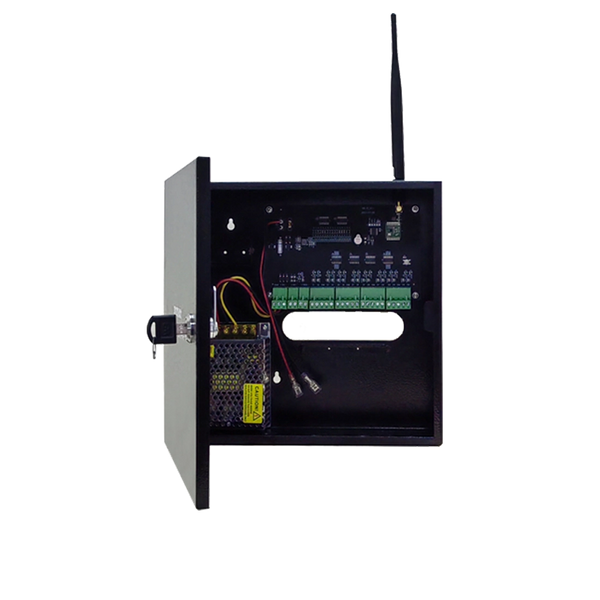
This is the option most people mean when they search for an alarm without Wi-Fi. The control panel has a SIM card slot. You insert an ordinary SIM card, just like in a phone. When the alarm goes off, the panel itself sends a text message to the numbers you have set and calls those numbers.
The big advantage: you don't depend on anything. No router, no provider account, no internet subscription on site. As long as there is mobile coverage — and in the Netherlands that is almost everywhere — you get your alert.
3. Wi-Fi with mobile back-up
The third option combines both. The system normally uses Wi-Fi for the app, but falls back on the SIM card as soon as the internet connection drops. You get the convenience of app control plus the certainty that an outage won't leave you in the dark.
How exactly does a SIM card alarm work?
Technically, it's simpler than it sounds. The control panel contains a mobile module, similar to the one in a phone. When an alarm is triggered, the system follows a fixed sequence:
- A sensor detects movement, an opened door or a vibration and reports it wirelessly to the control panel.
- The control panel activates the siren.
- The control panel sends a text message to the preset numbers.
- The control panel calls those numbers — with good systems, until someone answers.

Many SIM card panels also work the other way round: you can arm and disarm the system remotely with text commands. To prevent just any sender from doing that, better systems only accept those commands from phone numbers stored in the panel in advance.
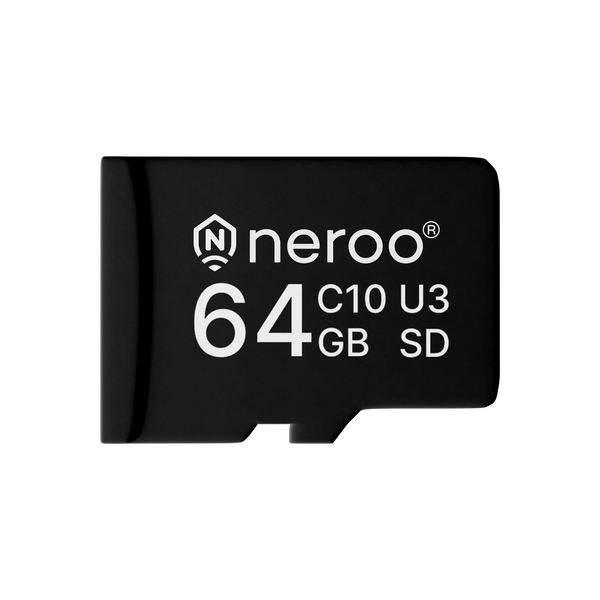
You don't need an expensive subscription for the SIM card itself. A prepaid or low-cost M2M card is enough, because data usage is minimal: text messages and short calls. Do make sure the card doesn't expire automatically after a long period of non-use — that's the most common mistake.
Why choose security without Wi-Fi?
Internet outages and power cuts
An alarm system that only sends alerts via Wi-Fi is exactly as reliable as your router. During an internet outage or a power cut the router drops out, and your alerts with it. A system with a SIM card and a built-in back-up battery simply keeps sending alerts in both cases.
This is not a theoretical risk. The number of home burglaries in the Netherlands has fallen sharply over the past ten years — from 64,675 in 2015 to 21,628 in 2025 — but in the first months of 2026 the Dutch police recorded an increase for the first time in years: 8,618 burglaries from January to May, against 8,290 in the same period a year earlier.
Places where there simply is no Wi-Fi
For many users this is the deciding reason. There is no Wi-Fi:
- in a motorhome or caravan on a campsite or storage site;
- on a boat in the harbour or at anchor;
- in a shed, lock-up garage or summer house at the back of the property;
- in a holiday home you only use a few weeks a year;
- on a building site or in a temporarily rented storage unit.
In all these places a SIM card is not an alternative to Wi-Fi, but the only workable solution.

Jammers and signal interference
A signal jammer is a device that makes wireless communication locally impossible. According to the Dutch Authority for Digital Infrastructure (Rijksinspectie Digitale Infrastructuur, RDI), jammers can disrupt mobile telephony, GPS, car locks and alarm systems, among other things. In the Netherlands all types of jammers are prohibited: possession, use and sale are criminal offences, and no permits are issued for them. The RDI also points out that a jammer can make the emergency number 112 unreachable.
So the risk is real but limited, precisely because use is a criminal offence and the devices cannot legally be bought in the Netherlands. If you want to take it into account, look mainly at the number of alert routes a system has: one that sounds a siren and sends a text and calls is less dependent on a single channel than a system that only sends a push notification over the internet.
For motorhome and caravan

CamperGuard PRO — Comfort
Built-in SIM card slot, so no Wi-Fi needed. When the alarm goes off, the siren sounds and the system automatically calls the numbers you have set, until someone answers. Powered by the 12V leisure battery or a 220V adapter, with up to 24 hours of back-up during a power cut.
View the kitNote: the 2G network is disappearing
This is the most important point of this entire article, and it is almost always skipped in comparisons. Many cheap ‘GSM alarm systems’ you come across online work exclusively on the 2G network. That network is being dismantled in the Netherlands.
The current situation according to the Netherlands Authority for Consumers & Markets (ACM): the Dutch operators KPN and VodafoneZiggo have already switched off their 3G networks, and Odido will switch off 3G in August 2026 at the earliest. For 2G, Odido has already stopped, VodafoneZiggo will not switch it off completely before the end of 2026, and KPN will switch the network off in December 2027. KPN confirms on its own website that 2G will stop for good on 1 December 2027, and that from March 2026 the network is already being switched off for customers who no longer need it.
That affects more devices than you might think. The Dutch Association of Insurers (Verbond van Verzekeraars) estimated that around 100,000 users in the Netherlands still run on 2G/GPRS, mainly for burglar alarms, fire alarms and care alarms. The good news in that report: usually the whole system does not need replacing, only the modem or the dialler.
The practical consequence for you is simple: don't buy an alarm system that only supports 2G, and with any SIM card system explicitly ask which networks it can handle. A system you buy now for a few years must still be able to make calls in 2028.
To be clear: Neroo control panels with a SIM card slot work on 4G. So they will keep texting and calling when 2G is switched off for good in the Netherlands.
What to look for when buying
Go through these points before you order a system without Wi-Fi:
- Supported networks. Does the control panel work only on 2G, or also on 4G/LTE? See the previous section.
- Alert routes. Do you only get a text message, or does the system call you too? You can miss a text; you can't miss a phone call that keeps repeating.
- Back-up battery. How long does the control panel keep working without power? A system that bridges 24 hours covers almost any outage.
- Independent siren. Does the outdoor siren run on its own battery, separately from the control panel?
- Security of text commands. Does the control panel only accept commands from preset numbers?
- Monthly costs. After purchase, a system without a subscription only costs you the call credit on the SIM card.
And don't forget the basics. The Dutch Police Quality Mark for Secure Housing (Politiekeurmerk Veilig Wonen) does not put the alarm system first, but approved locks and fittings on windows, doors and skylights, an extra lock on a sliding door, good outdoor lighting with a dusk sensor, a view of who is at the door, and arrangements with the neighbours when you are away. An alarm system is the layer that comes on top of that, not a replacement for it.
Which Neroo systems work without Wi-Fi?
Our range includes three control panels with a SIM card function — all three on 4G, each for a different situation:
- The CamperGuard Pro for motorhomes and caravans has a built-in SIM card slot. You don't need Wi-Fi: when the alarm goes off, the siren sounds and the system automatically calls the preset numbers until someone answers. It is powered by the 12V leisure battery or a 220V adapter, with up to 24 hours of back-up.
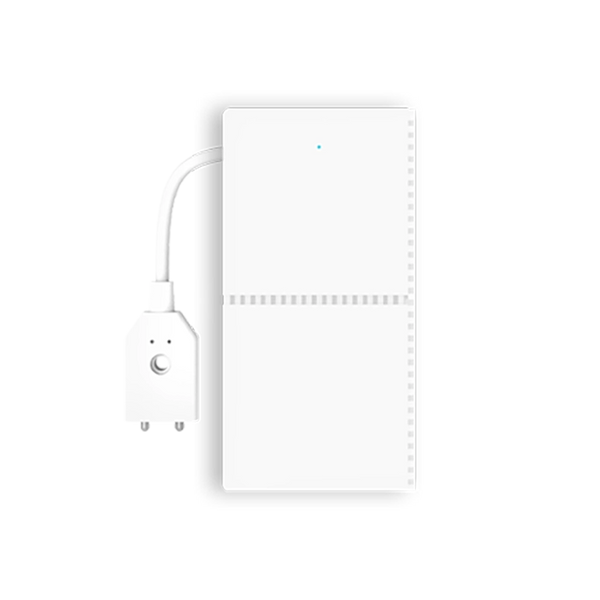
- The ShieldLink® Marine is the same set-up for boats and yachts, supplemented with the AquaSense water detector that warns you of a leak or a problem with the bilge.
- The ShieldLink® Pro for home and office works via the app as standard, but can be fitted with an optional SIM card. During a Wi-Fi outage or power cut, alerts then come in by text message and phone call, and you can control the system with text commands. The control panel has a back-up battery of up to 24 hours and an outdoor siren with its own battery.
All Neroo systems work without a monthly subscription: you pay once for the equipment and after that only for the SIM card if you use one.
Our kits with a SIM card

ShieldLink® Pro — Complete
For home and office. App and touchscreen, with an optional 4G SIM card as a fallback during a Wi-Fi outage or power cut.
View product
CamperGuard PRO — Complete
For motorhome and caravan. Built-in SIM card slot, text message and phone call, 12V or 220V power.
View product
ShieldLink® Marine — Complete
For boat and yacht. SIM card slot plus the AquaSense water detector against leaks and bilge problems.
View productOur solution
Alarm system without Wi-Fi, on 4G
On the solution page you can see which kits work with a SIM card, what you need and what it costs — with no monthly subscription.
View alarm systems without Wi-Fi
Can an alarm system work without Wi-Fi?
Yes — an alarm system with a SIM card alerts you by text message and phone call over the mobile network, so it keeps working in places without internet and during a Wi-Fi outage or power cut.
Frequently asked questions
How does an alarm work without Wi-Fi?
The sensors communicate wirelessly and directly with the control panel, without going through your router. When the alarm is triggered, the siren goes off. If you also want to be alerted remotely, a control panel with a SIM card sends that alert over the mobile network as a text message and phone call.
How does a SIM card alarm work?
You insert an ordinary SIM card into the control panel, just like in a phone, and store the phone numbers that should be alerted. When the alarm goes off, the panel itself sends a text message to those numbers and calls them. Many systems can also be controlled remotely with text commands, exclusively from those preset numbers.
Which home alarms work without Wi-Fi?
Roughly three types: systems with only a local siren, systems with a SIM card that alert you by text and phone, and systems that normally work via Wi-Fi but fall back on a SIM card during an outage. The last two are the only types that also reach you when you are not at home.
Which security works without Wi-Fi?
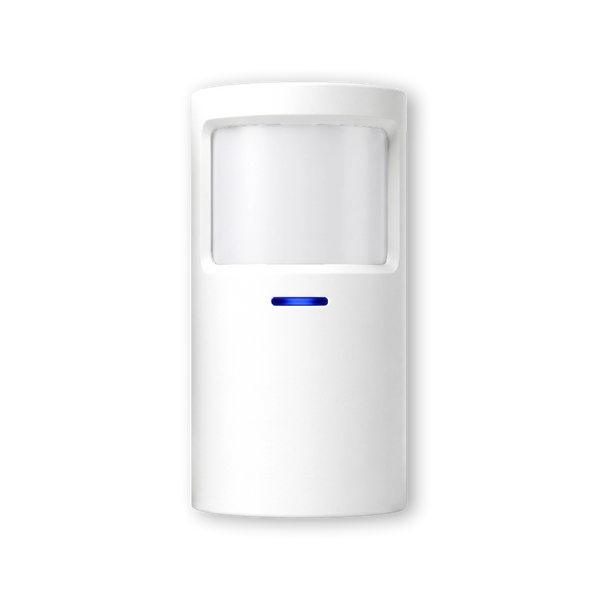
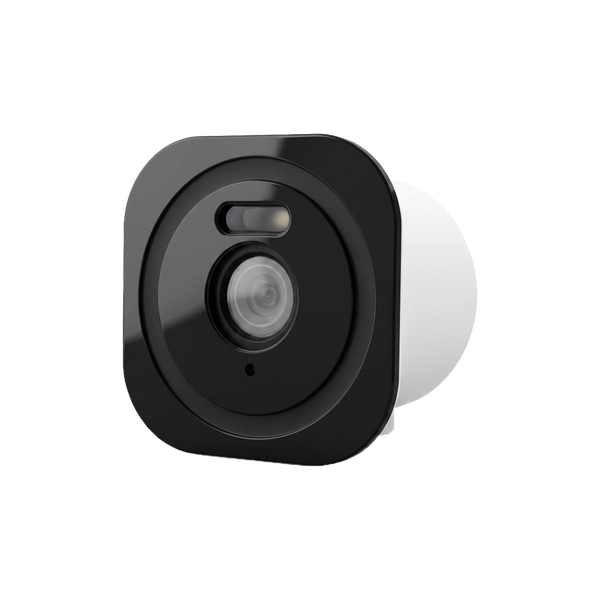
Besides alarm systems with a SIM card, motion, door and window sensors, sirens, smoke and carbon monoxide detectors and water detectors also work without internet, as long as they are wirelessly connected to a local control panel. Cameras with live view are the exception: they do need an internet or mobile data connection for remote viewing.
Which SIM card is best for an alarm system?
A simple prepaid or M2M card is enough, because usage is limited to text messages and short calls. Pay attention to two things in particular: that the card doesn't expire automatically with little use, and that the card and the control panel support a network that will stay around — KPN's 2G network in the Netherlands stops for good on 1 December 2027.
Sources
- ACM (Netherlands Authority for Consumers & Markets) — Consequences of the switch-off of 2G and 3G
- KPN — The old 2G network will stop from 1 December 2027
- Dutch Association of Insurers — 5 questions about the phasing out of 2G GPRS
- Dutch Authority for Digital Infrastructure — Jammers
- Dutch Police Quality Mark for Secure Housing — Prevention tips
- ANP — After ten years of decline, 4% more home burglaries in the first months of 2026


