















Short answer: mount a motion detector high up in a corner of the room, aimed at the route an intruder has to take — the hall, the stairs or the room behind the patio doors. Don't mount it opposite a window, above a heater or in an air flow, because heat and sunlight are the best-known causes of false alarms.
Our solution
Home alarm system
Wireless sensors you install yourself, alerts straight to your phone and no monthly fee that keeps running.
View the options
How a motion detector sees movement
A motion detector in an alarm system doesn't see like a camera. It reacts to heat moving through its field of view: a person walking through the room. Two things follow from that which determine where it should go. It detects movement across its view better than someone walking straight towards it, and anything that quickly heats up or cools down — sun on the floor, a heater switching on — can be mistaken for a person.
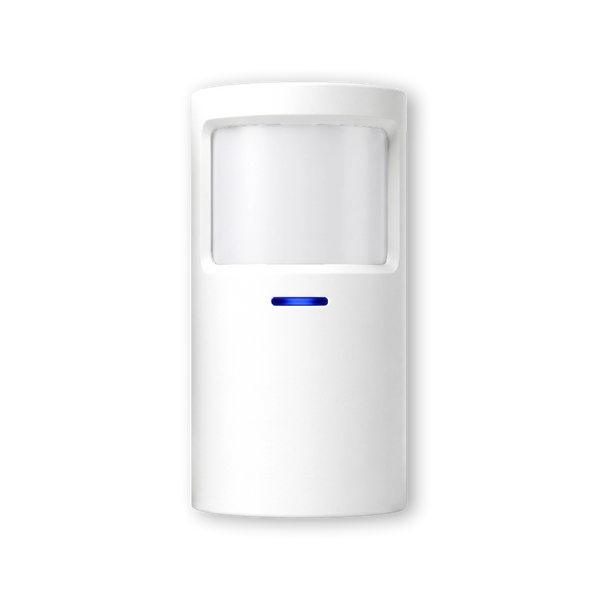
Neroo's ShieldSense detectors have a detection angle of 110° and a range of up to 8 metres. That's plenty to cover an average living room or hall from one corner, as long as you point it the right way.
The best spot per room
The rule of thumb: mount it high up in a corner, so it looks diagonally into the room and crosses the walking route from the door or window to the rest of the house. A burglar usually gets in through a door or window on the ground floor — by forcing it or by stepping in somewhere that's been left open. That's where the route you want to cover begins.
| Room | Why here | Exactly where |
|---|---|---|
| Hall or corridor | Almost every route through the house passes here | In the corner opposite the front door, looking along the stairs |
| Living room | Often the room behind the back door or patio doors | In the corner on the same side as the patio doors, so it looks into the room |
| Landing | Anyone who wants to get upstairs has to pass here | At the top of the stairs, aimed at the stairs and the doors |
| Garage or utility room | A rear entrance that's often less securely locked | Aimed at the door into the house |

Because the ShieldSense is wireless, you don't need to run cables: you choose the best spot, not the spot where a wire happens to run. Thanks to the swivel mount you can aim it exactly as you want, and to fit a new battery you just click it off again. After mounting, test whether it responds when you walk through the room, and move it a little if necessary before fixing it permanently.
Pitfalls that cause false alarms
- Opposite a window. Sun suddenly falling on the floor or headlights sweeping through the room change the temperature in its view. It's better to mount it with its back to the window.
- Above or next to a heat source. A heater, radiator or open fire switching on produces exactly the kind of change it reacts to.
- In an air flow. A ventilation grille or air conditioner blows warm or cold air through its view.
- Behind an obstacle. A cupboard, plant or curtain in its field of view creates a blind spot. It can't see movement through glass.
- Where the pet walks at night. If your dog or cat roams freely, don't put a motion detector in that room; protect the doors and windows there with door/window contacts instead.
How many motion detectors do you need?
Fewer than you think. A detector doesn't need to watch every room, only the places an intruder has to pass to get to anything. For an average terraced house, that's often the hall and the living room, and possibly the landing. Combine that with door/window contacts on the doors and ground-floor windows: they alert as soon as something is opened, before anyone is inside. The motion detector is your second layer, for when someone gets in anyway.
Which motion detector should you choose?
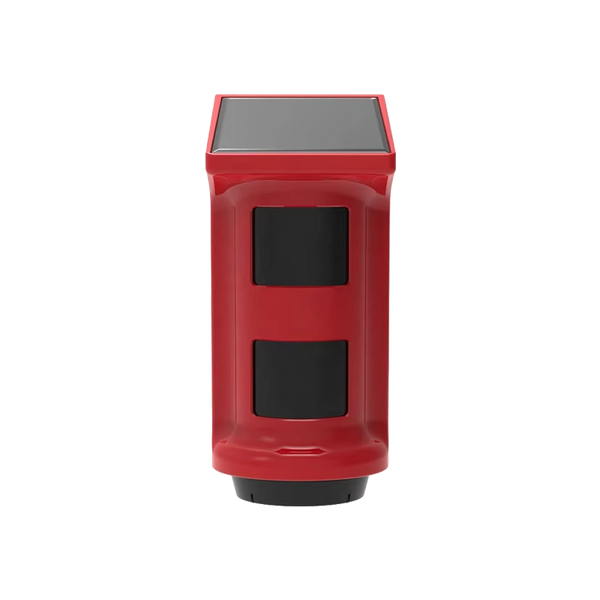
For most rooms the ShieldSense is enough: 110°, up to 8 metres, wireless via 433 MHz. If you want something that's barely noticeable, the ShieldSense Mini is ultra-compact and you aim it with a magnetic mount. For a shed, garage or outbuilding further away, the ShieldSense Elite is the one: it uses LoRa with a range of up to 500 metres, an encrypted connection and anti-tamper protection, so the signal reaches the control panel through walls and across the yard.
So where should you mount a motion detector?
A motion detector works best high up in a corner, aimed at the route an intruder has to take, and not opposite a window, above a heat source or in an air flow.


Our solution
Home alarm system
Wireless sensors you install yourself, alerts straight to your phone and no monthly fee that keeps running.
View the options
Frequently asked questions
How high should you mount a motion detector?
Mount it high up in a corner, so it looks diagonally into the room and sees the walking route over the furniture. After mounting, test whether it responds when you walk through the room, and adjust it before fixing it permanently.
Can a motion detector be mounted opposite a window?
Preferably not. Sunlight suddenly falling on the floor or headlights sweeping through the room can cause a false alarm. Mount it with its back to the window.
Does a motion detector work through glass?
No. A motion detector reacts to heat moving through its field of view, and glass blocks that. If you want to protect a window or glass door itself, use a door/window contact or a glass-break detector.
How many motion detectors do I need?
Only in the places an intruder has to pass, such as the hall, the living room and possibly the landing. Combine them with door/window contacts on ground-floor doors and windows.
Can I use a motion detector in the shed or garage?
Yes. If the outbuilding is further from the house, choose a detector with extra range, such as the ShieldSense Elite with LoRa and a range of up to 500 metres.
Sources and references
- Politiekeurmerk Veilig Wonen (Dutch Police Secure Housing quality mark), Burglary methods (in Dutch) — consulted September 2026
- Politie (Dutch police), Tips to prevent burglary (in Dutch) — consulted September 2026
- Neroo.nl, Product data for ShieldSense, ShieldSense Mini and ShieldSense Elite


