















Short answer: You protect a motorhome differently from a house, because it's almost always parked in places without Wi-Fi and without a power socket — and often without you nearby. So a motorhome alarm needs to be able to alert via the mobile network rather than the internet, draw power from the onboard electrical system, and be fitted without drilling into the interior. On top of that, start with the simple things: park out of sight, don't leave valuables visible, and don't leave the vehicle unattended in remote spots.
Our solution
Alarm system for motorhomes
Alerts via SMS and phone call instead of Wi-Fi, runs on the onboard power supply and comes with you to every pitch. No monthly fees.
View the motorhome systems
Key takeaways
- No Wi-Fi at the pitch: an alarm that only alerts via the app often won't reach you on the road.
- A SIM card isn't an extra here but the main route: alerting via SMS and a phone call works anywhere there's mobile coverage.
- The CamperGuard Pro keeps calling until someone on the set numbers answers — important if your phone is in your jacket pocket on the beach.
- Power comes from the onboard supply. You can connect to 12V, with the 12V plug or via a 220V adapter; the included converter kit keeps the voltage stable.
- During a power cut, the control panel keeps running for up to 24 hours on its internal battery.
- Fitting without drilling: with the included adhesive strips you don't need to damage anything in the interior.
- In 2024 the Dutch police called for extra vigilance where motorhomes are parked unattended, after dozens of thefts in coastal towns in North Holland.
A motorhome is a home on wheels, but you don't protect it like a home. The differences lie precisely in the things an alarm system relies on: a fixed internet connection, a power socket, and someone nearby. In a motorhome all three are regularly missing, and that's exactly what determines what you need.
Why a motorhome is vulnerable
Three things make a motorhome more attractive than a house. It's often parked somewhere nobody knows it, it contains a lot of value in a small space, and it can be driven away in its entirety. That last point is a difference from a house that's easy to forget: with a home the loot goes, with a motorhome sometimes the whole thing.
On top of that, you're usually not right next to it. On a campsite, by a beach access or at an overnight stop along the route, it's left unattended for a few hours to a few days. An alarm that goes off while nobody hears it doesn't do much then — unless it lets you know.
What the Dutch police report about motorhome theft
That this isn't a theoretical risk is shown by reports from the Dutch police themselves. In May 2024, the Dutch police reported that dozens of motorhomes had been stolen in the province of North Holland in previous years, mainly in coastal municipalities and tourist towns such as Julianadorp, Egmond aan Zee, Zandvoort and Volendam. The police describe it as a recurring annual phenomenon, with mainly vehicles belonging to German, Swiss and Austrian tourists being taken.
The appeal the police made is telling about what works: keep an extra eye out where motorhomes are parked unattended, and report suspicious situations. Supervision is the bottleneck. A system that reaches you within seconds turns an unattended motorhome back into one that's supervised — from a distance.
Why an ordinary home alarm falls short here
A home alarm system assumes two things as a given: there's Wi-Fi, and there's mains power. In a motorhome, both are assumptions that often don't hold.
No Wi-Fi. Campsite Wi-Fi is patchy, rarely reaches your pitch properly, and at a car park along the route there's nothing at all. A system that can only send its alert via the internet is silent there.
No power socket. A control panel with an ordinary plug needs a hook-up. If you're parked somewhere without power, the system falls back on its battery and then it's done.
Nothing can get damaged. In a house you drill a small hole in the wall. In a motorhome you don't want a screw through a wall panel, for the sake of both watertightness and resale value.
What a motorhome alarm needs to do
Those three bottlenecks translate into three concrete requirements. Check them off for every system you consider.
Alerting without Wi-Fi
This is the most important one. The system must be able to use the mobile network instead of the internet. The CamperGuard Pro has a built-in SIM card slot for this: when the alarm goes off, you immediately receive an SMS or a phone call, without any Wi-Fi needed nearby.
One detail makes the difference in practice: in the event of a break-in, the system activates the siren and automatically calls the preset phone numbers until someone answers. A missed alert simply doesn't happen. You can also control the system with SMS commands, and this only works from numbers stored in the control panel in advance — so not just anyone can send commands.
If there is Wi-Fi, you can also use the app as usual. But the basics work without it.
Power from the onboard supply
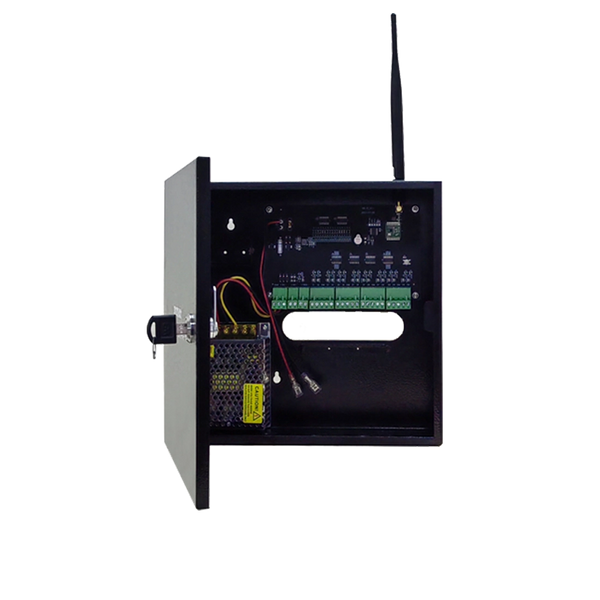
A motorhome alarm should live on what's already there. You connect the CamperGuard Pro via the 12V connection on the leisure battery, with the 12V plug, or via the 220V adapter when you are on hook-up. A converter kit is included that ensures a stable connection to the onboard supply, so the system keeps working even with voltage fluctuations — and in a motorhome you simply get those.
If the power goes out completely, the internal battery keeps the system active for up to 24 hours. Enough to get through a night.
Fitting without drilling
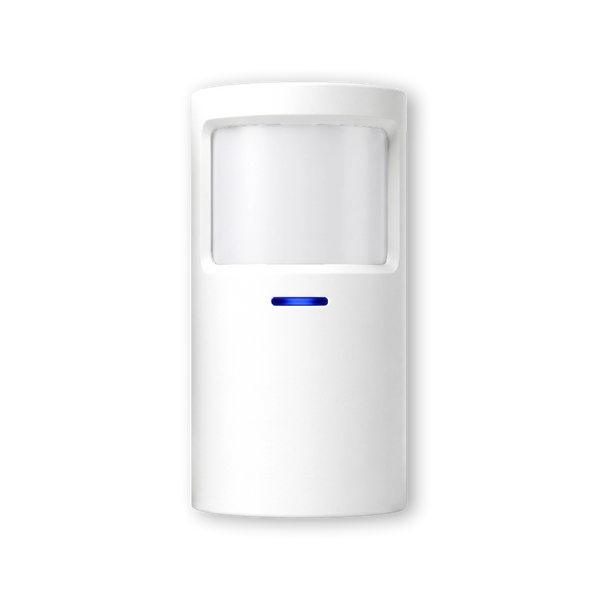
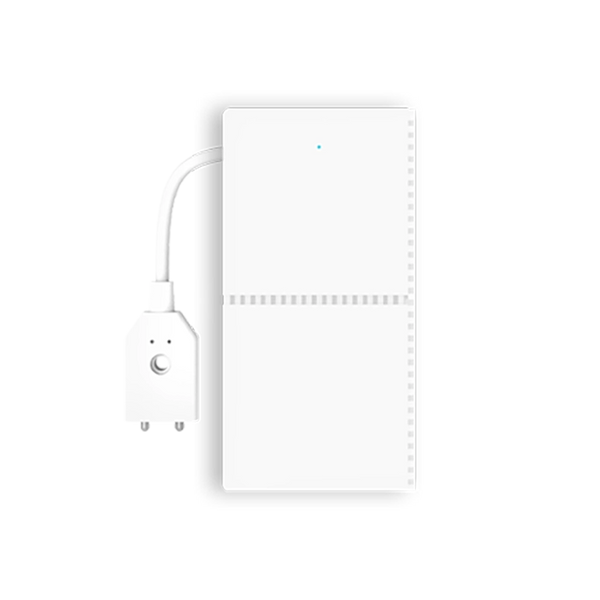
The control panel and sensors go in place with strong adhesive strips, without an invasive installation. That's not just easy, it also keeps the wall intact — and when you sell, you take everything off again and it comes with you to your next motorhome.
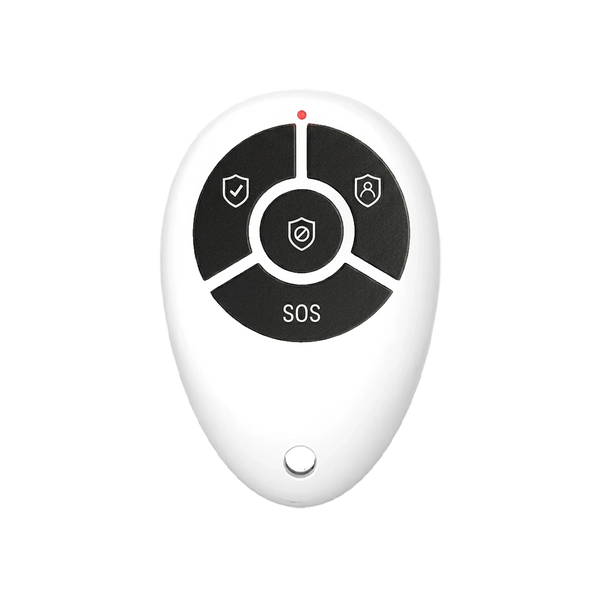
For operation on the road, it's useful to know you're not dependent on a single method: the control panel has a colour touchscreen on which you can adjust settings, codes and zones directly, and you can also arm and disarm with the remote control, by SMS or via the app.
What else you can do yourself
An alarm is the finishing touch, not the starting point. These habits cost nothing and remove most of the risk.
- Leave nothing visible. A bag on the seat or a laptop on the table is all the excuse someone needs.
- Choose your pitch deliberately. A spot in view of others is safer than a remote corner, however beautiful.
- Vary your location on longer stays. A motorhome that stands in the same unattended spot for days stands out.
- Don't keep keys and documents in the motorhome. Certainly not the spare key.
- Take photos of your belongings and note serial numbers. That helps when reporting a theft and with your insurance.
- Check your policy for exactly what's covered when the motorhome is on a campsite or by the roadside.
Which CamperGuard kit suits you?
All three kits have the same CamperGuard Pro control panel with SIM card slot. They differ in the number of sensors included.

CamperGuard PRO — Start
The basics: the control panel with SIM card slot and the first sensors. Enough to protect the entry door and the living area, and to expand later.
View product
CamperGuard PRO — Comfort
A step up, for those who want to cover hatches, the rear storage garage and a second area as well as the door.
View product
CamperGuard PRO — Complete
The most extensive kit, for a larger motorhome or for those who want to cover everything in one go without ordering more later.
View productOur solution
Alarm system for motorhomes
You buy it once and take it to every pitch — and to your next motorhome. No subscription that keeps running while it's in winter storage.
View the motorhome systems
How do you protect a motorhome against break-ins?
Choose an alarm system that alerts via the mobile network instead of Wi-Fi, that draws power from the onboard supply and that you fit without drilling — and combine it with the habits that pay off most: nothing valuable in view, a pitch that others can see, and no keys or documents in the motorhome.
Frequently asked questions
Does a motorhome alarm work without Wi-Fi?
That depends on the system. The CamperGuard Pro has a built-in SIM card slot and alerts via SMS and a phone call, so without Wi-Fi. If there is Wi-Fi, you can also use the app. A system that only alerts via the app needs internet.
How do you connect an alarm system in a motorhome?
Via the onboard supply. You connect the CamperGuard Pro to the 12V connection on the leisure battery, with the 12V plug or via the 220V adapter. A converter kit is included for a stable connection, and during a power cut the internal battery keeps the system active for up to 24 hours.
Do I need to drill holes to install it?
No. The control panel and sensors go in place with the included strong adhesive strips, without an invasive installation. Good for the walls of your motorhome and handy when you sell, because you can take everything off again.
What happens if I miss the alert?
In the event of a break-in, the CamperGuard Pro activates the siren and automatically calls the preset phone numbers until someone answers. You can set several numbers, for example a travelling companion's.
Where are motorhomes targeted most often?
In May 2024 the Dutch police reported dozens of motorhome thefts in North Holland over the previous years, mainly in coastal municipalities and tourist towns such as Julianadorp, Egmond aan Zee, Zandvoort and Volendam. The police asked for extra vigilance where motorhomes are parked unattended.
Sources
- Politie (Dutch police) — Motorhome thieves plague the North Holland west coast (in Dutch)
- Politie (Dutch police) — Tips to prevent burglary (in Dutch)
- Rijksinspectie Digitale Infrastructuur (Dutch Authority for Digital Infrastructure) — Licence-exempt frequency use (in Dutch)
- Het CCV — Burglary protection (in Dutch)


