















Short answer: A wired system gets power and signal from its own cable: no batteries, no shared radio band, but it does mean chasing walls and a fixed installation that doesn't move with you. A wireless system is mounted without any work on the building, can be extended later and comes with you when you move, but it runs on batteries and on a public frequency. In an existing home, wireless therefore almost always wins; in a new build or a bare shell, wired is a real alternative.
Our solution
See which situation applies to you
A dedicated page for each type of home, building or site, covering what you need and why. So you can quickly see which setup fits your situation.
View the solutions
Key points
- The difference lies in the connection, not in the quality of detection: both types use the same kinds of sensors.
- Wired: no batteries and its own cable network, so no band shared with other equipment.
- Wired means building work. In a home that is already finished, that means chasing walls, routing or cable trunking — and usually an installer.
- Wireless goes in without building work and comes with you when you move; you can extend it step by step.
- Wireless runs on a public frequency. The Dutch Authority for Digital Infrastructure (RDI) states that licence-exempt users must accept interference from others.
- For tenants, that is decisive: the Dutch government states that in the Netherlands, without permission, you may only make changes you can undo without much cost.
- In a new build or bare shell the biggest drawback of wired disappears, because the cables can be laid during construction.
The question “wireless or wired” is often asked as if one type is better. It isn't. They don't differ in what they detect, but in how the components talk to each other — and that difference plays out very differently in a house that already exists than in one still being built. Below, first the honest strengths of both, then how that translates into concrete situations.
What exactly is the difference?
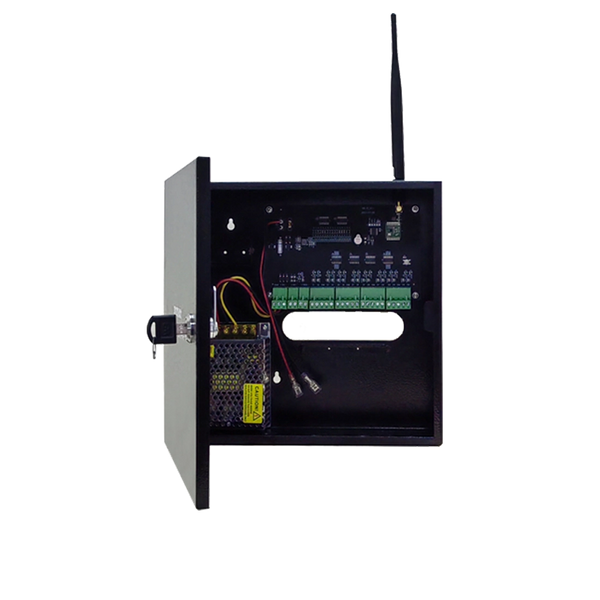
In a wired system, a cable runs from each sensor to the control panel. That cable carries both power and signal. In a wireless system, each sensor contains a battery and a small transmitter; the signal travels through the air to the control panel.
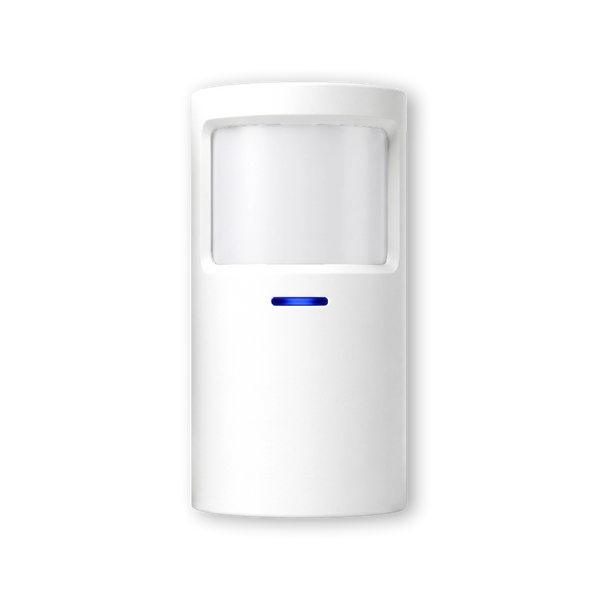
What is the same: the sensors. A motion detector that works on infrared does so in the same way in both cases. A door/window contact on a door is, in both cases, two parts that separate. So the choice isn't about better or worse detection, but about installation, maintenance and flexibility.
What a wired system does better
Two things, and it is only fair to name them plainly.
No batteries. Each sensor gets power from the cable. So there is never a detector that stops working because someone forgot to replace the battery. In a large building with dozens of detection points, that really saves maintenance.
Its own connection. The signal runs over a cable that belongs to that system alone. Wireless systems use a radio band shared with other equipment: the Dutch Authority for Digital Infrastructure (Rijksinspectie Digitale Infrastructuur) describes this as licence-exempt frequency use, where users must accept interference from others and prevent interference themselves as far as possible. In practice you rarely notice this, because the messages are short and rarely collide, but the difference exists.
On the other side is the installation work. In a home that is already finished, cabling means chasing walls, routing or visible cable trunking, usually an installer, and a system that stays fixed where it is afterwards. If you move, it stays behind.
What a wireless system does better
Installation without building work. No cables through walls, no dust, no repair work. You mount the sensors where they are needed and the system is up and running the same day.
Extending step by step. You don't have to plan the whole house in one go. Start with the places where someone could get in — back door, patio doors, a basement window — and add what turns out to be needed later.
It moves with you. Sensors come off, the control panel goes in the box, and in the next house you mount it again.
The drawback is the mirror image of wired's advantage: batteries you replace periodically, and that shared frequency. The first isn't too bad, because sensors only transmit when something happens and are otherwise at rest.
Which one suits your situation?
This is usually where the decision is made, not in the technical comparison.
Existing home, no renovation
Wireless, in almost all cases. Retrofitting cabling in a finished house is invasive and expensive, while the result at detection level is the same. If you are going to renovate in the foreseeable future anyway, it is worth coordinating the two.
Rented home or apartment
Here it isn't a trade-off but a precondition. The Dutch government is clear about changes to a rented home in the Netherlands: if you can undo the change without much cost — filling holes in the wall is the example given — you don't need your landlord's permission. Larger interventions do require that permission.
Running cables through walls falls into the second category. A wireless system falls into the first, and also moves with you to your next home. With an apartment, there is often the added point that shared areas aren't yours to drill into.
New build or major renovation
This is when wired becomes a serious alternative, because its biggest drawback — the building work — disappears when the walls are open anyway. If you want to go that way, involve it early in the building plans, because adding it afterwards is exactly the scenario you wanted to avoid.
There is a downside that is easily overlooked: you fix the layout at a time when you don't yet live in the house. Anyone who ends up using a room differently than planned is left with a detection point in the wrong place.
Business premises, warehouse or large site
Here distance is what counts most. Separate buildings, thick walls and concrete floors make range a real issue. That is exactly what wireless technology with a longer range exists for: the Elite line works with LoRa and, combined with the ShieldLink® Elite control panel, bridges distances of up to 500 metres, with a signal that penetrates walls and floors well.
Also watch a second track here: if you have insurance or a permit with requirements for the installation, check what it says before you choose a system. Those requirements may make the choice for you.
The questions that usually decide it
- Will walls be opened up soon? If not, wired is rarely worth it in practice.
- Is it your home? If you rent, a system that requires no building work is the safe route.
- Will you live here for a long time? If you move within a few years, being able to take it with you is worth money.
- How far is the furthest detection point from the control panel? With separate buildings or a large site, this determines which technology you need.
- Who does the maintenance? With many detection points, replacing batteries is a recurring task someone has to take on.
- Does an insurer or permit set requirements? Check that before you buy, not after.
Which systems does Neroo offer?
Neroo makes wireless systems. Below are the three setups that most often suit the situations above.

ShieldLink® Lite — Complete
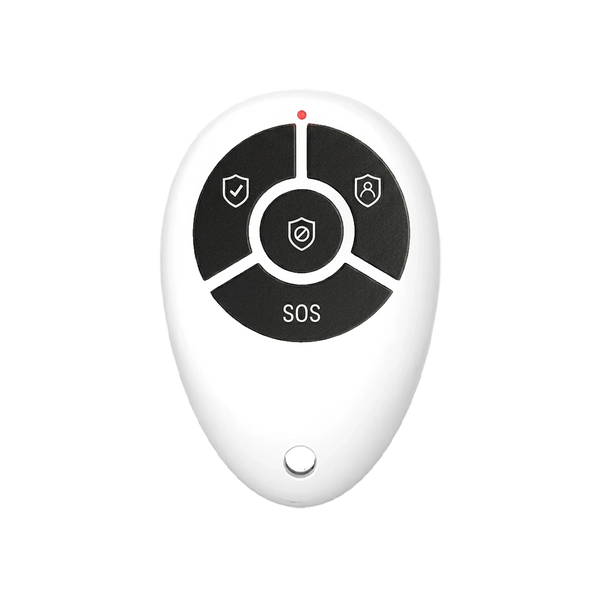
For a rented home or apartment. Arm and disarm with RFID key fobs, control via the Smart Life app, and nothing in the home you have to repair when you leave.
View product
ShieldLink® Plus — Complete
For the family home. Dutch-language colour touchscreen, control via app or remote control, and an external siren that keeps working during a power cut.
View product
ShieldLink® Elite — Complete
For businesses and larger locations. With LockSense Elite and ShieldSense Elite, this system bridges distances of up to 500 metres via LoRa.
View productFinally, the same sober caveat that goes with every system choice: the alarm is the finishing touch. The Dutch police state that homes with the Dutch Police Quality Mark for Secure Housing (Politiekeurmerk Veilig Wonen) are up to 90% less likely to suffer a successful burglary, and that quality mark starts with good locks and hardware and lighting. Wireless or wired makes no difference to that.
Our solution
See which situation applies to you
From rented home to warehouse: for each situation we describe what you need and why. That makes the choice much more concrete than a list of specifications.
View the solutions
Wireless or wired alarm system: which should you choose?
Only choose wired if the walls are open anyway — in a new build or major renovation — and you will never need to move the system; in every other situation, and certainly in a rented home, wireless is the practical choice because you install it without building work, extend it step by step and take it with you when you move.
Frequently asked questions
Is a wired alarm system better than a wireless system?
Not in what it detects: both use the same kinds of sensors. The difference lies in installation and maintenance. Wired has no batteries and its own cable connection; wireless goes in without building work, can be extended step by step and comes with you when you move.
Can I install an alarm system in a rented home?
In the Netherlands, according to the Dutch government, you don't need the landlord's permission for changes you can undo without much cost, such as holes in the wall you fill later. Running cables through walls doesn't fall under that and does require permission. A wireless system is therefore the safe route.
What about batteries in wireless sensors?
You replace them periodically. How long they last depends on the type of sensor and how it is used. Sensors only transmit when something happens and are otherwise at rest, so they use little power.
Can a wireless alarm system move house with you?
Yes. The sensors come off the wall and the control panel comes along, after which you mount and pair everything again in the new home. With a wired system, the installation stays behind in the building.
Can I add wireless sensors to an existing wired system?
Not just like that. Sensors and control panel have to be compatible, and that differs per brand and system. Neroo's wireless detectors are made for the ShieldLink control panels; if you want to extend an existing system from another brand, check with that supplier.
Sources
- Rijksoverheid (Dutch government) — Mag ik mijn huurwoning verbouwen of renoveren?
- Rijksinspectie Digitale Infrastructuur (Dutch Authority for Digital Infrastructure) — Vergunningvrij frequentiegebruik
- Politie (Dutch police) — Politiekeurmerk Veilig Wonen
- Het CCV (Dutch Centre for Crime Prevention and Safety) — Politiekeurmerk Veilig Wonen


